
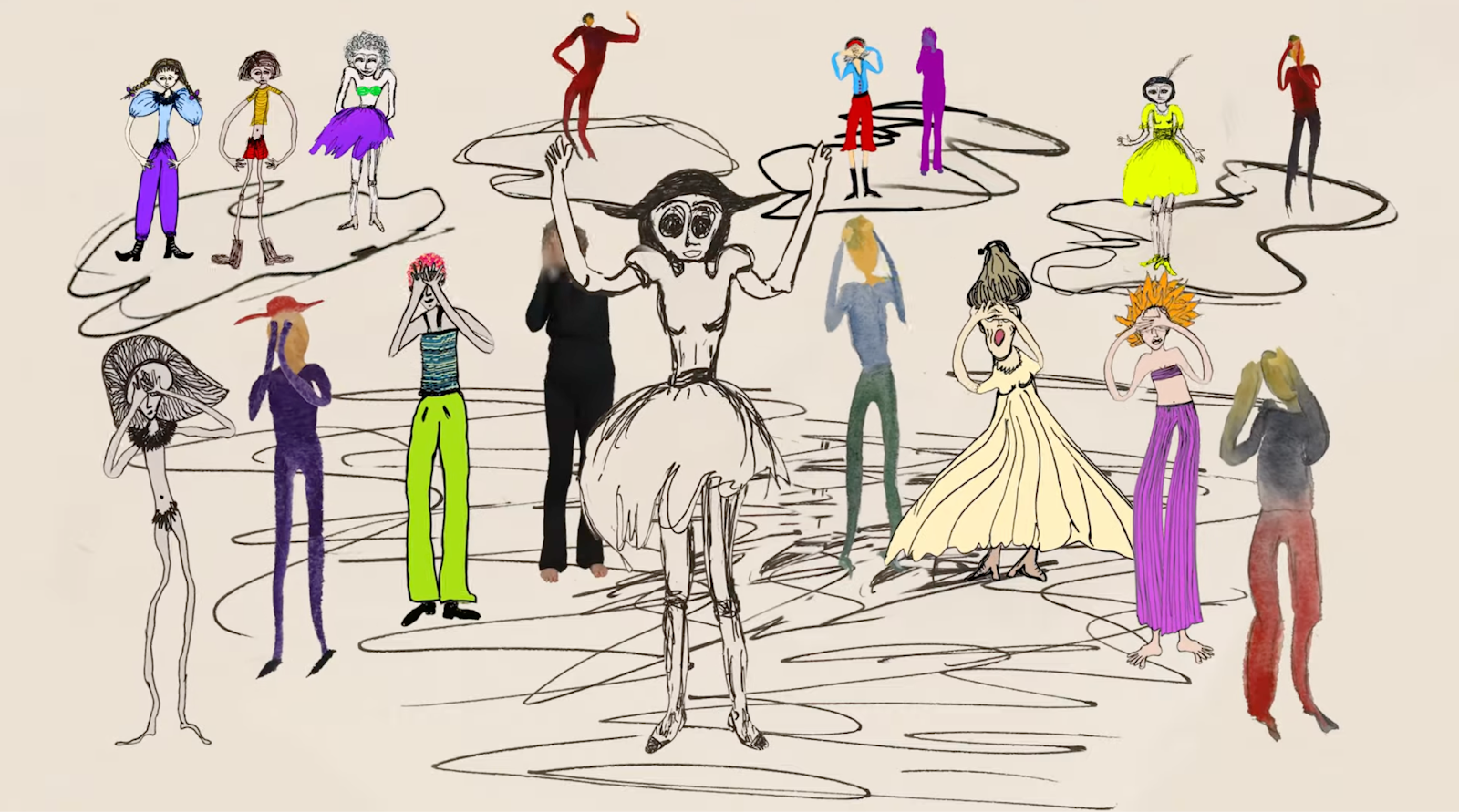
In a culture that treats many opinions like breaking news, Fella Cederbaum’s work offers a quieter and more reflective approach. The Door and The Great Offense present questions about what happens when the stories people tell about themselves, others, and the world begin to loosen. Through rhythmic, accessible verse, Cederbaum uses surrender, repetition, and wordplay to explore how language can act as both protection and a weapon.
Taken together, the two pieces form a kind of paired study of contemporary life. One turns inward to the narratives that help shape identity. The other looks outward to online spaces where those narratives are often displayed and challenged. The works do not offer fixed answers. Instead, they frame a possible response to modern chaos that involves careful attention, restraint, and the option to step back.
Letting Go In A World Of Grasping
Fella Cederbaum’s The Door centers on a sequence of letting go. The speaker describes how, “when I let go of the last thought I was holding, I saw a door,” and how releasing the last word of knowing causes the floor to drop away. The poem uses simple physical images such as walls, doors, and ceilings to describe inner structures that can appear solid and permanent.
In this text, feelings are compared to “light fluffy clouds that speckled the sky,” suggesting movement rather than fixed states. The poem continues into the body and refers to “organs, fluids, and cells” that hold stories and memories. As these are released, the speaker is no longer presented as an archive of past pain but as someone experiencing a shift in how the self is understood.
The Door As A Different Kind Of Exit
The Door also raises questions about external authority. The speaker refers to “releasing the last filaments binding my soul to some teacher or being whom I yearn to behold as the source of my freedom.” This line introduces the idea that a search for freedom can become linked to dependence on a person or figure seen as a guide. The poem does not name specific teachers or systems, but it presents this bond as something that can be examined and released.
The text describes an “unveiling of unfathomable might” that follows this release. The image of giving up a “last freckle” and jumping in with both feet suggests a complete willingness to enter this new state. The closing lines, “you are that dance / the dance of creation / spectacular/bright,” place the speaker within a larger sense of movement and creation rather than within conflict or struggle alone.
The Great Offense And The Noise Outside
While The Door focuses on inner experience, The Great Offense focuses on public and digital life. It describes “social media accounts full of stuff, full of stuff that you hate or you love or berate,” and notes that hearing truth can feel “too tough for the triggered and frail who go straight off the rail.” Every day, online behavior is presented through rhyme and repetition, including the way an “innocent word or pronoun” can trigger a strong reaction.
The poem includes lines about calling people names “without any shame” while still expecting love and respect. It also uses a repeated “blah blah blah” section that highlights how words can lose meaning when overused. Toward the end, the speaker asks, “Can you show me the door to get off this upside-down Earth?” which connects this text back to the earlier poem and its central image of a door as a point of change or exit.
A Measured, Artistic Counterpoint To Chaos
Across these works, Cederbaum combines poetry with music, performance, and visual elements, often through personas that stand between artist and audience. This method allows the themes to be presented through characters and voices rather than a direct personal statement. The focus on surrender, language, and the impact of digital communication appears consistently in her wider practice.
In a period defined by rapid communication and frequent public disagreement, The Door and The Great Offense map out two related areas of concern. One is the inner structure of thought, memory, and attachment. The other is the outer structure of discourse, especially online. The works do not prescribe a single correct response. Instead, they outline images and patterns that invite readers and viewers to notice how they hold on, how they speak, and how they might, if they choose, walk away.