

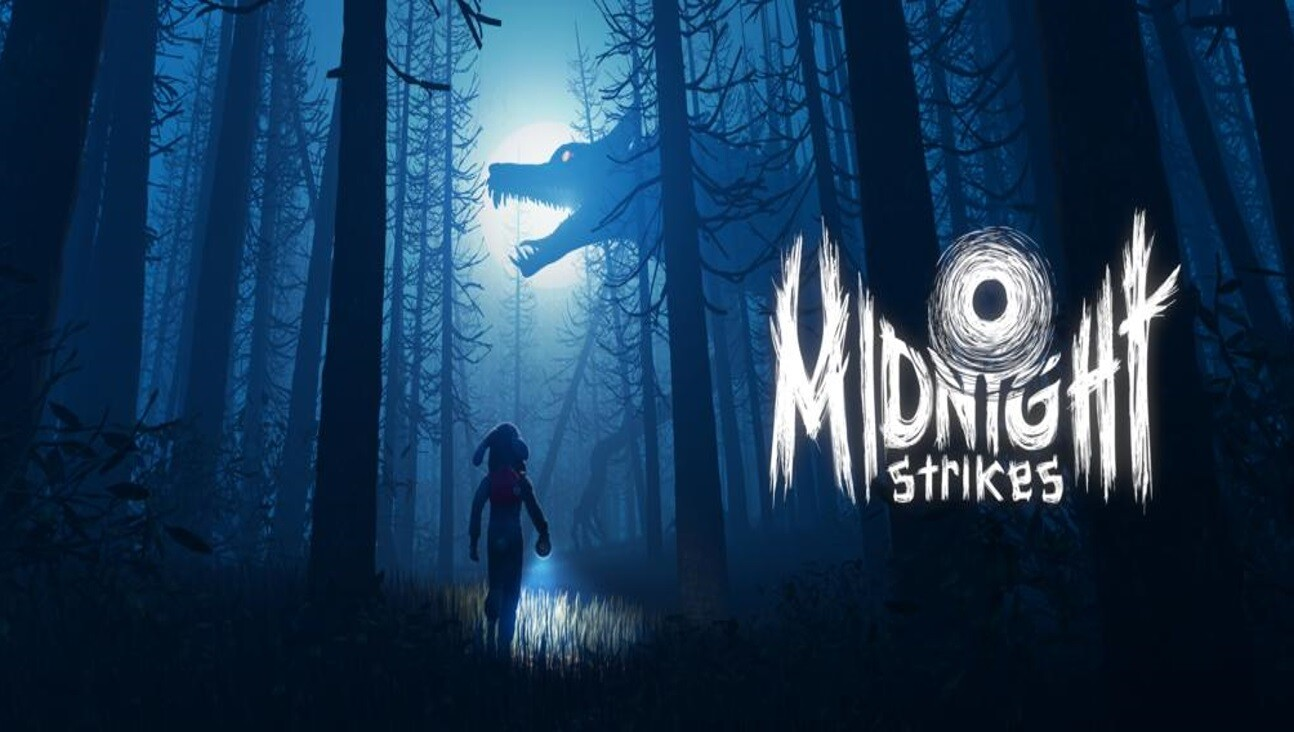
It began with a drawing. A rough sketch in pencil, the kind of thing an eight-year-old might scrawl on loose-leaf paper during a lull in class. In it, the hallways of a school bent at impossible angles, lockers gaped like mouths, and a shadow with too many arms stood where the principal’s office should be. That drawing, passed from child to parent, would become the seed for Midnight Strikes, an indie horror game now entering its final months of development.
The parent was not a game developer. Maria Pulera, spokesperson for the studio Lonely Rabbit, tells it simply: “The concept and characters were born from that imagination, from childhood fears. We wanted to carry that authenticity into every part of the game.” From there, a small team of artists and programmers began reshaping the sketch into something players could walk through, touch, and survive.
Turning Memory Into A Map
Midnight Strikes unfolds across seven environments, each drawing from some fragment of adolescence. An abandoned high school, its gym doors chained shut. A carnival where rides sway in an unnatural wind. A forest that swallows sound before it can travel more than a few feet.
This is not the standard jump-scare factory. Lonely Rabbit has leaned into psychological tension, crafting puzzles and AI-driven enemies that adapt to player choices. The design philosophy borrows less from Hollywood horror and more from the logic of dreams — where geography rearranges itself, and danger rarely approaches in a straight line.
Pulera explains that the spaces are built to feel both familiar and wrong. “The forest, in particular, plays on a deep-rooted fear of the unknown. It is a place that should bring peace, but here it becomes something much more unsettling.”
The Odds Against The Indies
For Lonely Rabbit, finishing the game is only half the battle. The indie horror market is crowded, with hundreds of titles appearing on platforms like Steam each year. In 2024, fewer than 8 percent of indie horror releases surpassed the visibility threshold of 500 user reviews, a key marker for algorithmic promotion.
The economics are unforgiving. Big publishers dominate distribution, and while streaming platforms such as Twitch and YouTube can catapult small games into the spotlight, the path is unpredictable. The same week one horror title goes viral, another — equally polished — might sink without notice.
This is why Lonely Rabbit’s next priority is to secure a publishing partner within the next two months. A deal would cover marketing and distribution, allowing the studio to focus on the final development push while ensuring the game reaches global audiences.
Designing For Strategy, Not Panic
One of the game’s defining mechanics is the integration of puzzles into high-tension situations. Players cannot simply run; they must stop, think, and use the environment to their advantage. In the high school level, that might mean finding a key hidden behind a fallen ceiling tile while the sound of approaching footsteps grows louder. At the carnival, a malfunctioning ride may need to be powered up to clear a path, forcing the player to stand exposed in the open.
Pulera puts it plainly: “Every decision matters. The puzzles and interactive elements force players to engage with their fears rather than escape them.” That design choice is risky. It can slow pacing and frustrate players accustomed to action-heavy horror. But it also rewards careful play and increases the game’s replay value — an important factor for longevity in a saturated market.
Building A Future On A First Impression
The stakes for Midnight Strikes extend beyond this single release. A well-received debut could establish Lonely Rabbit as a studio capable of delivering immersive, narrative-driven horror, opening doors to future projects and partnerships. A weak launch, by contrast, could leave the team struggling for relevance in a market that quickly moves on.
For now, the developers work in relative quiet, testing AI patterns, adjusting lighting cues, and refining the sound design that carries much of the game’s weight. The eerie creak of a door, the faint music of a carnival ride heard through static, these are the elements they hope will embed themselves in players’ minds long after the credits roll.
Whether the final product will match the unsettling promise of that first childhood drawing is an open question. But the team at Lonely Rabbit is betting that fear, the kind born from places we thought we knew, can still find its way back to us, pixel by pixel.