
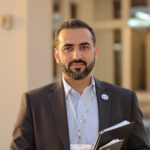
Dr. jur. Can Ansay did not wait for Germany’s drug laws to catch up with him. He went from the courtroom to the center of Germany’s medicinal cannabis debate. A trained lawyer who earned his doctorate at the University of Hamburg, he spotted a legal gap years before most politicians were willing to talk about it and then walked straight through it.
Today, his telemedicine platform DrAnsay connects over one million patients to licensed physicians who can prescribe medicinal cannabis legally, through an online process that takes minutes rather than months. The man behind the platform is not a physician, nor a lobbyist. He is a lawyer who built a legal architecture around access, and that distinction matters enormously.
From Law Office To Online Medicine
Ansay spent four years running his own law practice in Hamburg before pivoting entirely to health technology. The first move came in 2018, when he launched AU-Schein.de, a portal that let workers in Germany obtain paid sick leave certificates through an online questionnaire and a doctor’s review — no waiting room, no in-person visit.
Critics called it reckless. Regulators bristled. Still, it worked, and hundreds of thousands of users signed up. “No one thought it was legal to offer doctors’ notes online, especially since we gave them out [via] WhatsApp,” Ansay told Sifted in 2023. “Then we started, and everyone realised that it was.” That willingness to press forward where others retreated became his method.
When Germany began loosening its cannabis laws, Ansay was already moving. He launched Canation.com in 2022, which became Europe’s first legal online marketplace for cannabis flowers. Then came the broader push: folding medicinal cannabis access into the DrAnsay.com platform itself, where patients could request a prescription, speak with a doctor by video, and receive their medication at home within days.
Medicinal Cannabis And The Legal Opportunity
Germany’s relationship with cannabis law has been long, contested, and slow. Medicinal cannabis was legalized in 2017, but access remained painfully limited — tangled up in specialist referrals, expensive consultations, and a bureaucracy that many patients simply could not navigate. Ansay saw that gap for what it was: a legal and human problem with a technology solution.
The real turning point came on April 1, 2024, when Germany’s Cannabis Act — the Cannabisgesetz — reclassified cannabis from a narcotic to a medicine under German law. That single legal reclassification slashed the administrative burden on prescribers. General practitioners, including those operating via telemedicine, could now prescribe medicinal cannabis the same way they prescribe other controlled drugs. Ansay’s platform was built for exactly that moment. DrAnsay.com processes requests through a three-step process.
Patients complete a medical questionnaire, a licensed physician reviews the case and, optionally, speaks with the patient by video, and a valid prescription is issued, redeemable at any German pharmacy or delivered to the patient’s door within 2 to 4 business days. According to the platform, more than three million treatments have been processed to date. “I only love services that enable great benefits for many people so simply that even experts are surprised,” Ansay has said. “For many, therefore, I seem like a ghostrider on the highway until they realize that they are the ghostriders.”
Legal Pushback And The Broader Fight
No disruptive platform operates in Germany without attracting legal scrutiny, and DrAnsay.com has had its share. Early in 2025, the Hamburg Regional Court ruled in favor of the Apothekerkammer Nordrhein — the North Rhine Pharmacists’ Chamber — finding that certain advertising practices on the platform violated Germany’s Pharmaceutical Advertising Act (Heilmittelwerbegesetz). The court held that cannabis, given its addiction potential and side effects, requires a personal doctor-patient consultation before prescription, a standard the purely online model did not consistently meet. The ruling had not yet become final at the time of publication.
The legal challenge reflects a wider tension in Germany’s evolving cannabis policy. The country is now the largest nation by population to have passed a national adult-use cannabis law, but political winds are shifting. The CDU/CSU, which won the February 2025 elections and formed a governing coalition, pledged during its campaign to reverse recreational legalization. Health Minister Nina Warken proposed amendments in June 2025 specifically aimed at curbing what she called an “inflationary increase” in medicinal cannabis prescriptions. Platforms like DrAnsay.com found themselves at the center of that argument, cited both as evidence that the system works and as evidence that it can be gamed.
Ansay has never appeared particularly troubled by the controversy. His record is that of someone who builds first and argues later, a posture shaped, perhaps, by years of legal training that taught him where the lines are drawn and how far they can be tested. He remains CEO of DrAnsay.com, the platform he built into one of Germany’s most-discussed — and most-used — medicinal cannabis services. Whether the legal pressures ultimately narrow the platform’s reach or sharpen its model, the broader shift he helped accelerate in German health access is difficult to walk back. The patients are already there, and there are over a million of them.