
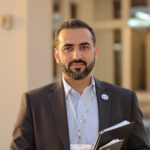
The machinery of global health often hums with a polite, diplomatic rhythm. It is a world where grand statements about equity are made in marble halls, far removed from the dusty clinics where patients actually seek care. Mishal Khan disrupts this quiet consensus. A professor at the London School of Hygiene and Tropical Medicine (LSHTM), she does not simply study health systems; she interrogates them. Her work exposes the uncomfortable truths that keep the poor sick and the powerful comfortable—from the bribes exchanged in private medical practices to the structural racism embedded in Western academia.
Khan’s career began with a refusal to accept the status quo. She entered Cambridge University as an outsider, a young woman from a background that rarely finds its way into the elite tiers of British science. She didn’t just survive; she excelled, earning a double first-class degree. At 24, an age when most researchers are still learning the basics, she published a randomized controlled trial in The Lancet. She did so without a PhD, driven by a fierce intellect and a desire to prove that diversity and excellence are not mutually exclusive. Today, she stands as a leading voice on decolonization and health governance, challenging the very institutions that trained her. We sat down with Khan to discuss her journey from the tuberculosis clinics of Pakistan to the center of global health policy.
The Silence Of The Clinics
Q: You started your career with a rapid ascent that few scientists experience. What drove you to push so hard, so early?
A: I knew I was entering a space that wasn’t built for me. “I broke social barriers by being an ‘outsider’ admitted to Cambridge University,” Khan says, reflecting on her early years. “I achieved a double first class. At 24, without even holding a PhD, I published a randomised control trial in the world’s leading medical journal—The Lancet.”
That early victory was not just about personal ambition. It was about authority. I realized that if I wanted to change how health systems treated the vulnerable, I needed the credentials to make people listen. My work then focused on tuberculosis, a disease often associated with poverty. We often think of TB as a medical problem, but it is a social one. Women in Pakistan were dying not because the drugs didn’t work, but because they couldn’t get to the clinics. I wanted to map those invisible barriers.
Q: Your work often highlights what others overlook. You don’t just study the disease; you study the corruption around it.
A: Precisely. We can pour millions into aid, but if the system is broken, the money vanishes. In many low-income countries, the private sector is often the primary source of help, yet it is frequently unregulated and driven by profit. “Commercialization of healthcare leading to profits being prioritized over patients” is a massive, often-ignored crisis. We pretend these systems function like the NHS, but they don’t. They operate on a marketplace logic that leaves the poorest behind.
The Hidden Economy Of Medicine
Q: Let’s talk about your recent work in Pakistan. You uncovered something that is rarely discussed openly: widespread bribery among medical professionals.
A: We knew it was happening, but we needed proof. You cannot fix a problem you cannot measure. Doctors would never admit to taking kickbacks in a standard survey. So, we had to be inventive. “My recent study, which exposed the level of bribery taken by doctors in Pakistan, was done through a new method developed by my team and me,” Khan explains. “It allows ‘hidden’ practices in healthcare to be studied.”
Q: What did this new method reveal about the scale of the problem?
A: The results were stark. We found that financial incentives were directly distorting patient care. Doctors were prescribing unnecessary medicines or pushing patients toward specific services because they received a cut of the profit. “It was the first time such an ambitious and controversial study has been done in any country.” This isn’t just petty corruption; it is a systemic failure that drains resources from those who have nothing to spare. When examining global health governance, we often focus on high-level policy. But if the doctor-patient interaction is corrupted by a bribe, no amount of Geneva-level policy will save that patient.
Dismantling The Ivory Tower
Q: You have turned that critical lens back onto the academic world itself. You were part of the team overseeing the Independent Review of Racism at LSHTM. Why is that work necessary?
A: We cannot preach equity abroad while practicing exclusion at home. The structures of global health are still deeply colonial. Decisions are made in London or New York for people in Asia and Africa. “I have spoken and written about biases, unjust hierarchies, and the need for lower-income countries to take control of their health priorities,” Khan asserts.
It is about who gets to speak. “Years later, I published in the same journal again, highlighting the barriers that ethnic minority women face in reaching senior positions in academia.” We need to see that the lack of diversity in leadership isn’t an accident. It is a design flaw. My goal now is to be a “brave/outspoken public health scientist” who clears the path for others. I want young women, especially those from underrepresented backgrounds, to see that they can reach the top without compromising their voice.
Q: What is the next fight for you?
A: I want to bridge the gap between research and reality. “My overall long-term goal is therefore to establish myself as an authority in my area of research, which is (broadly) strengthening health systems and policies for better health.” We are seeing massive aid cuts and a retreat from global solidarity. We need scientists who are not afraid to be political, who will demand accountability from funders and governments alike. I intend to be one of them.