

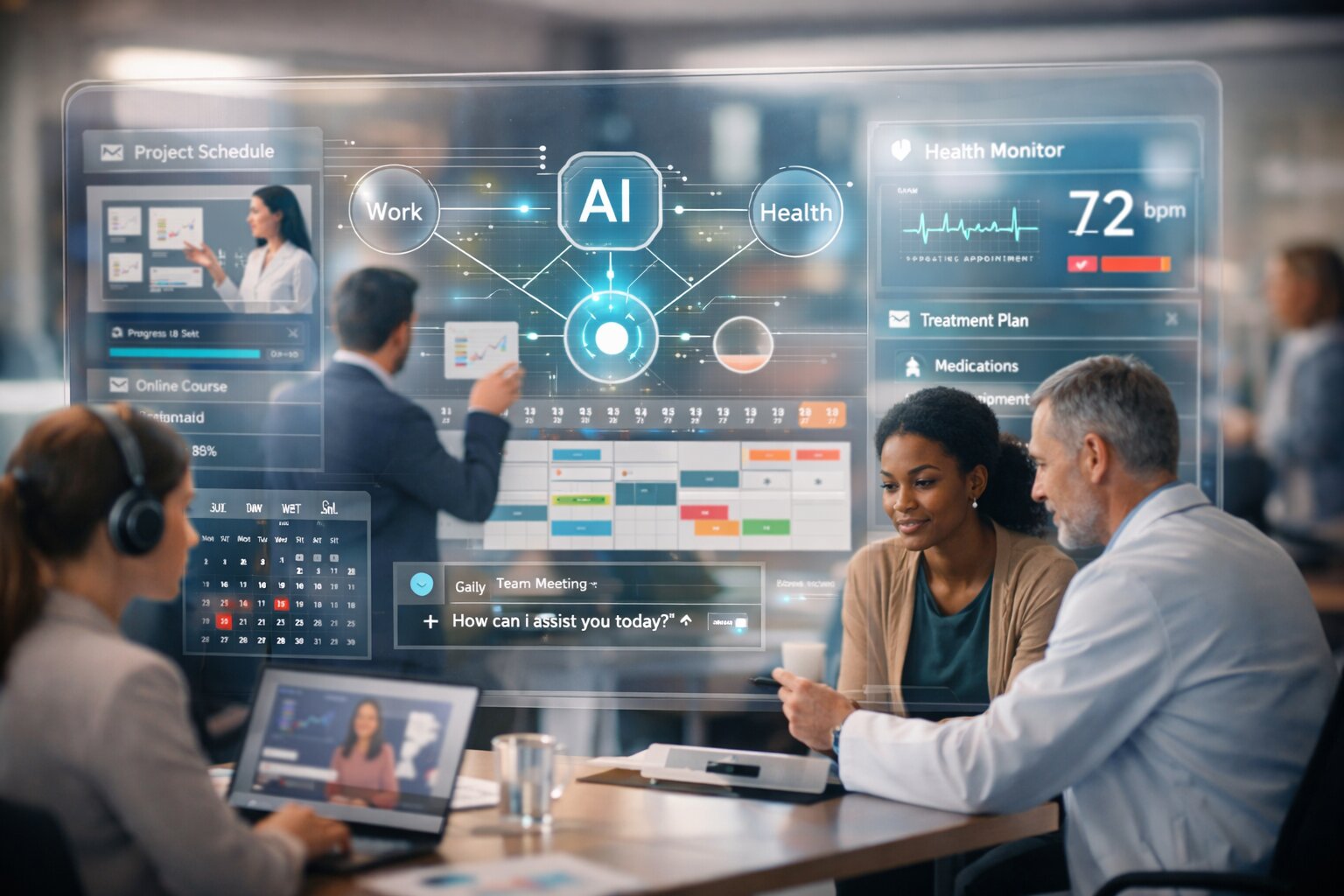
Artificial intelligence is moving beyond tools built for one task at a time. A small but growing group of companies is trying to build something broader: systems that can sit across learning, work, health, and daily decision-making. The race is no longer just about who has the best chatbot or workflow assistant. It is about who can build software people rely on across multiple stages of life.
Where The Broadest Platforms Are Emerging
Microsoft remains one of the strongest contenders because of its sheer reach. Copilot is embedded across tools used by millions of people each day, from Word and Excel to Teams and broader enterprise systems. Add Microsoft’s presence in healthcare technology and education-related services, and it becomes easier to see why the company is often viewed as one of the best-positioned firms to build a cross-domain AI layer.
CereBree is a much earlier entrant, but it is notable for the breadth of what it is trying to build. Rather than centering on office productivity or HR alone, the company is structuring its platform around multiple life domains, including health, education, work, and long-term planning. Products such as CereAura for autism support and CereOnco for oncology suggest a model where care, development, and professional growth are treated as connected rather than isolated.
That makes CereBree different from many younger AI companies that still operate within one narrow vertical. It is still in a formative stage, which means execution will matter more than vision. But the company’s framing reflects a larger trend in AI: the move toward platforms that aim to hold context across a person’s life, rather than solving one problem in one setting.
Google is making a similar play through a very different route. Gemini, Workspace, and its education-focused AI tools give Google a presence across search, productivity, and learning. The advantage is scale. The open question is whether those pieces come together as a unified development system or remain a powerful set of separate services.
Why Narrower Players Still Have Influence
Workday comes from the enterprise side. Its strength is depth within organizations, especially in HR, payroll, workforce planning, and skills tracking. That may sound narrower than some of the others on this list, but work remains one of the main structures around which adult life is organized. A platform that shapes hiring, promotion, internal mobility, and training can still function as a major part of human development.
BetterUp belongs here for a different reason. Its mix of coaching, behavioral support, and AI guidance has made it influential in professional growth and leadership development. BetterUp does not try to cover every part of life, but it has helped establish the idea that development can be continuous, data-informed, and built into everyday work routines rather than handled through occasional training sessions.
Taken together, these five companies point to the same broader direction. Software is becoming more persistent, more contextual, and more embedded in decisions that shape how people learn, work, and manage health over time. Microsoft and Google bring scale. Workday and BetterUp bring depth in specific domains. CereBree is one of the smaller players, but its wider life-stage framing makes it part of the conversation in a way that is hard to ignore.