

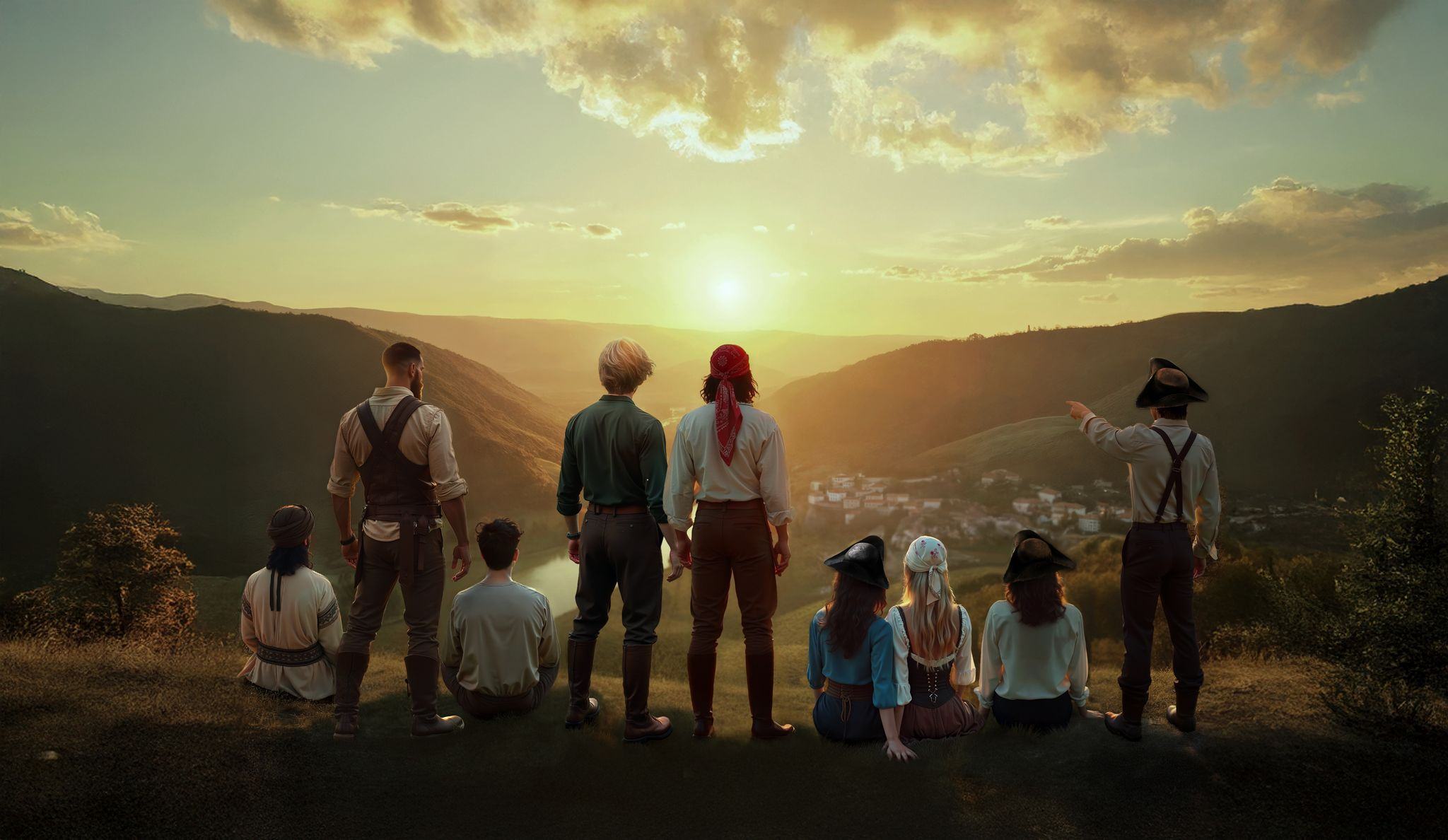
“Characters become legends when readers carry them beyond the final page,” Fatma Helal reflects on her debut novel, “The Legend of Moura: Swallows and Vultures,” a sweeping maritime tale that reimagines 18th-century piracy through a decidedly female lens. Her voice carries the weight of a storyteller who spent years nurturing an entire world inside her imagination, one that refused to release its grip until she committed it to paper. The novel arrives at a moment when publishing demographics shift, and reader appetites demonstrate a growing hunger for historical narratives that center women claiming power in domains traditionally reserved for men.
The book market stands at an interesting crossroads. Publishing industry sales climbed to $32.5 billion in 2024, marking a 4.1 percent increase over the previous year, with adult fiction leading growth across all categories. Within these figures lies a compelling transformation. Women now author the majority of books in the marketplace, a striking reversal from 1960, when female-authored works represented merely 18 percent of new releases. Helal enters this landscape with a historical adventure set in 18th-century Portugal, following Isabel Cardoso, a shipbuilder’s granddaughter from Porto, who transforms betrayal into liberation through an act of defiant reclamation.
From Porto Shipyards To Open Waters
Helal’s work distinguishes itself through its examination of themes that many contemporary novels approach with gentler hands. Isabel’s journey begins with dreams of sailing the world, ambitions that crystallize into action when a trusted partner betrays her. The protagonist seizes control of her fate by stealing what belongs to her along with her betrayer’s boots, purchasing a ship, and assembling a crew that becomes her chosen family. The narrative refuses to position Isabel merely as a victim or survivor. She emerges instead as the architect of her own destiny, commanding respect through competence while charting treacherous waters both literal and figurative.
The crew Isabel assembles reflects both historical maritime reality and contemporary literary interest in diverse ensemble casts. Éder and Inez, twins who survived childhood hardship, bring resilience forged through struggle. Amine, a cook from Tangier, contributes culinary skills and cultural knowledge. Azhar and Ceferino offer fighting prowess honed through experience. Tomé, a traveller from Macau, brings perspectives shaped by journeys across continents. Together they fashion a new kind of pirate crew, one that prizes loyalty, wit, and freedom more than gold. Their collaboration across cultural boundaries creates dynamics that explore friendship, conflict, trust, and the complexities of chosen family bonds.
The boots Isabel steals become a recurring symbol throughout the narrative, representing her rebellion, her inheritance, and the mysterious connection between the woman she becomes and the legend she is destined to meet. Symbols that carry weight across a narrative demonstrate the craft sophistication publishers seek in debut fiction, where every element serves multiple purposes within the story’s architecture. Helal describes herself distinctly when she says, “There are readers, authors, writers, and then there are storytellers. I’ve always carried scenes, places, and entire atmospheres inside my imagination. Characters grew there, lived there, whispered their stories to me.”
Craft Sophistication And Emotional Resonance
Helal’s writing earns praise for richness in detail and feeling. Ports, shipyards, and coastlines throughout the story feel alive, grounding readers in sensory experience while advancing character development and plot. Isabel stands out as a believable, determined young woman who grows into her strength throughout the narrative. Her longing for Ana Maria, her childhood friend left behind, gives the story an ache that runs beneath the adventure, adding emotional complexity to what might otherwise remain purely action-driven. The novel explores friendship, love, and self-discovery alongside maritime adventure, refusing to privilege any single element over others.
The capacity to weave multiple narrative threads together distinguishes accomplished fiction from merely competent storytelling. Isabel’s personal journey, her relationships with crew members, her longing for Ana Maria, the symbolism of the stolen boots, and the larger adventure framework all interconnect organically. Contemporary readers expect complex emotional landscapes even within action-driven narratives. The inclusion of romantic or deeply emotional connections enriches stories without becoming their sole focus, a balance that serves both character development and plot momentum. Readers increasingly demonstrate impatience with clumsy construction, having been trained through decades of sophisticated television and film to recognize narrative finesse.
The narrative examines possession and its consequences through Isabel’s relationships. When trusted partnerships dissolve through betrayal, the protagonist must work through the wreckage while building new bonds on different foundations. Her crew becomes her chosen family, yet the story acknowledges the complications that arise when loyalty confronts self-interest. These psychological complexities add depth to what could be straightforward adventure fiction, instead creating space for readers to consider how power dynamics shape human relationships.
Market Forces And Industry Context
The odds facing debut novelists remain sobering. Publishers accept between one and two percent of manuscripts they receive, with success rates for agented authors climbing to roughly 10 percent. Eighty-three percent of debut authors write at least one complete novel before producing the work that ultimately gets published, with an average of 3.24 manuscripts preceding publication. The average age of debut novelists stands at 36 years, suggesting the journey toward publication requires substantial perseverance. Helal’s manuscript represents years of work, the story refusing to leave her until she finally sat down to write it.
Yet the landscape shifts favorably for those who succeed with the right story at the right moment. Consumer surplus, the economic measure of reader benefit from new books, increased 41 percent for readers who prefer female-authored works and 15 percent even among those who typically favor male authors, according to NBER research by economist Joel Waldfogel. The influx of female writers delivers value that male-authored books would struggle to replicate, suggesting markets respond positively to diversifying voices beyond mere ideological commitment to representation. Fiction sales rose 12.6 percent to $3.26 billion in 2024, driven partly by character-driven narratives exploring identity and relationships.
The Middle East and Africa audiobook market demonstrates robust momentum, projected to grow significantly through 2031, reflecting strong compound annual growth. Female authors from the region gain increasing recognition in international markets, with works examining female agency within complex cultural contexts drawing particular attention from global publishers. Helal’s novel arrives as publishers worldwide demonstrate heightened interest in stories set during historical periods rich with possibility, and the genre continues attracting both writers and readers.
Literary scholar Dr. Margaret Chen of Columbia University, who studies contemporary fiction, offers a measured assessment of historical adventure narratives featuring female protagonists. “There’s always risk when writers attempt to correct historical exclusions through fiction,” she notes. “Readers may question authenticity or suspect modern sensibilities imposed on past contexts. The challenge becomes whether the author possesses sufficient skill to create believable period characters who nonetheless resonate with contemporary audiences. Success requires research depth combined with narrative restraint.”
Cultural Conversations And Reader Communities
The 18th century witnessed transformations in global trade, colonial expansion, and the movement of peoples across oceans. Maritime settings offer natural laboratories for examining power structures, survival, and identity formation outside conventional social constraints. Ships become microcosms where traditional hierarchies face challenges, where competence matters more than birthright, and where characters must negotiate new forms of social organization. Historical fiction currently experiences strong market performance, frequently examining women’s roles in past societies while implicitly commenting on contemporary dynamics.
Helal’s approach to her characters reaches well past typical authorial relationships. “Each character is very close to my heart, and they are all like my children,” she explains. Her aim reaches beyond publication success into cultural impact. “I want young generations to cosplay them at parties. I want readers to live with my characters and feel them.” She envisions her characters becoming legends, living beyond the pages through readers’ imagination and connection. The focus on an ensemble cast rather than a solitary hero allows for richer exploration of how individuals function within groups, how power distributes among equals, and how collective action requires negotiation and compromise.
Success for debut novels increasingly depends on an author’s ability to build communities around their work. Social media platforms, particularly Instagram and TikTok, reshape literary culture through user-generated content and peer recommendations. BookTok alone drives substantial sales for titles that capture community imagination, with certain debut authors achieving bestseller status through viral attention. Publishers recognize that authors who engage authentically with their audiences, sharing insights into their creative process and participating in online conversations, generate stronger sales and more sustained interest. The democratization of literary taste through social platforms means traditional gatekeepers wield less influence over which books gain traction.
Maritime adventure novels, particularly those featuring female protagonists, could resonate strongly with communities seeking alternatives to conventional historical narratives. Readers who appreciated recent successes in pirate-adjacent fiction, fantasy featuring seafaring elements, or historical novels centering women in unconventional roles represent potential core audiences. Precision in identifying and reaching audiences interested in these intersecting themes ensures that books find the readers most likely to appreciate their particular contributions.
Distribution Networks And Publication Realities
Despite positive trends, debut authors face significant hurdles. Distribution networks, particularly for international authors, remain complex and challenging. While digital platforms offer global reach, physical book distribution encounters obstacles ranging from shipping costs to import restrictions. The Middle East publishing market, despite robust growth in specific nations, grapples with fragmented distribution systems and inconsistent retail infrastructure outside major urban centers. Literary agents play crucial roles in helping authors work through these challenges, providing contract negotiation, rights management, and cross-cultural representation.
The global book market projects growth from approximately $142.72 billion in 2025 toward $156 billion within the coming years, with the Middle East expected to become one of the fastest-growing publishing regions during this forecast period. Digital platforms reshape discovery mechanisms, with social media influencers and targeted analytics changing how debut authors connect with readers. Publishers now utilize sophisticated data from sales patterns, browsing habits, and social media engagement to identify and reach specific demographics. Book fairs continue serving as vital platforms for discovery and rights sales, with events like the Cairo International Book Fair and Sharjah International Book Fair drawing massive attendance and providing authors and publishers opportunities to forge connections.
Data from major retailers reveals that only 0.01 percent of books sell more than 100,000 copies, underscoring the competitive nature of the industry. Censorship attempts surged 65 percent in 2023 compared to 2022, reaching 4,240 unique titles targeted, according to the American Library Association. Publishers and authors work through increasingly polarized landscapes where choices about which stories to tell carry heightened stakes. The publishing landscape offers both promise and challenge. Markets demonstrate an appetite for diverse voices and complex narratives. Distribution channels, although imperfect, offer unprecedented global reach.
The Broader Literary Landscape
What distinguishes successful debuts often comes down to alignment between the author’s vision, the reader’s appetite, and market timing. Helal’s focus on a female protagonist claiming power in a traditionally male domain positions her work within current cultural conversations while offering a fresh perspective on familiar genres. Isabel’s crew, comprising individuals from diverse cultures and backgrounds, embodies both historical possibilities and contemporary values regarding diversity and inclusion. The novel combines adventure, romance, friendship, and self-discovery, exploring how individual choices ripple through communities, how betrayal reshapes trust, and how chosen families form under pressure.
Individual debut novels rarely reshape literary landscapes single-handedly. Yet each contributes to evolving conversations about which stories matter, whose voices deserve amplification, and how we understand human experience through narrative. The collective impact of works like “The Legend of Moura” helps determine whether future publishing landscapes include space for complexity, nuance, and difficult truths alongside more comforting narratives. Research demonstrating increased consumer surplus from the influx of female authors suggests markets benefit from diversity beyond moral imperatives. Readers gain access to perspectives and stories that male-authored works cannot provide.
Helal’s novel joins thousands of other debuts released annually, each representing someone’s creative vision and years of labor. Some will find enthusiastic audiences and critical acclaim. Others will struggle for visibility despite quality. Most will occupy the vast middle ground, garnering modest sales and mixed reviews while making incremental contributions to broader literary culture. Helal stands at the threshold every debut author recognizes, where years of work culminate in the moment when a manuscript becomes a published book, when private creative labor transforms into a public artifact open to interpretation, criticism, and celebration.Reflecting on her work and its place within these larger dynamics, Helal returns to fundamental motivations. “I wrote this book because the sea has always been a place where the rules could be rewritten,” she explains. “Isabel takes what belongs to her and charts her own course, literally and figuratively. She builds a family from strangers and leads them through storms both real and metaphorical. The story honors both the adventure and the ache, the freedom of the open water and the cost of leaving shore. That tension between what we gain and what we lose when we choose ourselves drives everything worth writing about.”