

The year was 2008, and Steve Jobs stood before a packed auditorium at Apple, unveiling the App Store with characteristic confidence. “We do not want to be the bottleneck,” he declared, promising developers direct access to millions of customers. Jobs could not foresee the digital gold rush that would follow: millions of apps competing for attention in an increasingly crowded marketplace. Today, more than 15 years later, that promise has evolved into a battlefield where visibility determines survival, and most apps disappear into obscurity within days of launch.
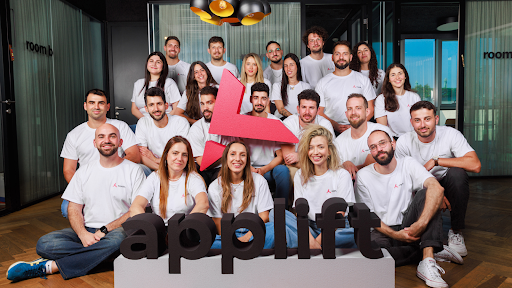
This reality spawned an entire industry of consultants, agencies, and self-proclaimed experts who promised to crack the App Store success code. Most peddle the same predictable playbook: optimize screenshots, refine descriptions, and hope for the best. Roi Klein understood this fundamental flaw when he founded Applift, and his solution would challenge everything the industry believed about app marketing.
The Quiet Revolution
Klein built something fundamentally different: an app marketing engine that consistently delivers results seven times better than any other market solution. While competitors remained trapped in traditional App Store Optimization, Applift developed proprietary technology that places apps precisely where high-intent users search.
“The industry should engineer results rather than guess,” Klein says. While competitors rely on hunches and generic tactics, Applift uses behavioral data to position clients’ apps exactly where their ideal users search.
Data-Driven Precision
Klein completely reimagined how app discovery could function. The results speak with brutal clarity. Within three months, one finance app client witnessed their cost per install plummet by 97 percent while app installs exploded by 3,087 percent. Loan conversion rates jumped 172 percent. Lifetime value increased significantly, first-time deposits surged, and average revenue per user grew consistently across all metrics.
Unlike paid advertising campaigns that require continuous budget allocation, organic positioning builds momentum over time and delivers compounding returns.
The Infrastructure Behind the Results
Klein’s methodology rests on a simple premise: most app marketing fails because it interrupts users rather than meeting them where they intend to act. Research confirms that 70 percent of users will consider downloading apps they encounter through targeted, relevant approaches.
Applift ensures apps appear first when users actively search for solutions.
One of the industry’s most extensive app store databases powers this strategy. Complex data drives every optimization decision, keyword strategy, and campaign move. This infrastructure enables Applift to reverse-engineer competitor strategies, then systematically overtake their rankings and capture users.
The database processes millions of data points daily, tracking search patterns, user behaviors, and competitive movements across major app stores. Klein describes it as “the nervous system” of his entire operation.
Beyond the Algorithm
Most agencies treat app stores like search engines, optimizing for keywords and hoping algorithms respond favorably. Klein recognized that app stores function more like ecosystems, where understanding user behavior patterns matters more than gaming ranking systems.
“The app marketing industry stands at a crossroads,” Klein observes. “Traditional methods have become obsolete. The future belongs to companies that can create organic app store trends rather than chase them.”
Psychology of App Discovery
Klein’s team analyzes search data and decodes the psychology behind it. Why do users search? When do users search? What compels them to choose one app over another? This behavioral intelligence allows Applift to position clients for visibility and genuine conversion.
By understanding the psychology driving app discovery, Applift can accurately predict which positioning strategies will drive downloads and high-quality users who impact revenue metrics.
Regulated Verticals and Global Reach
This becomes critical for apps in regulated sectors like finance, cryptocurrency, and gaming, where traditional advertising faces severe restrictions. Klein has positioned Applift as the preferred solution for these challenging verticals, developing specialized expertise in navigating compliance requirements while driving growth.
More than 150 apps across every category and vertical have entrusted their growth strategies to Applift. This client diversity spans globally, with Applift promoting apps in any country clients choose. Klein’s team uncovers untapped, high-potential markets that many app owners have yet to recognize, positioning their apps to dominate these emerging opportunities.
Strategic Partnerships
Klein’s recent partnership with SCCG Management signals broader industry recognition. SCCG, a leading gaming, betting, and entertainment advisory firm, validates Applift’s position as a serious player in performance-driven app marketing.
SCCG’s extensive network provides Applift access to companies facing the most restrictive advertising environments, sectors where organic positioning serves as the primary legally compliant growth strategy.
Competitive Landscape
Traditional App Store Optimization companies like App Tweak, Adapty, RadASO, App Marketing Assassins, and AppAdvice help app owners manage their optimization efforts. Most focus on conventional approaches: adjusting metadata and experimenting with screenshots. While valid, these approaches deliver moderate results compared with the breakthrough results Klein’s clients expect.
The fundamental difference lies in methodology: while competitors guess and optimize for existing trends, Applift engineers results and creates new trends. Data rather than opinions drives every optimization and campaign decision.
Most competitors function as consultants or tool providers. Applift operates as a performance partner, measuring success by actual business outcomes achieved rather than recommendations provided.
Industry Impact
Klein’s methodology challenges the entire app marketing ecosystem to reconsider its priorities. Companies should measure success by user quality and revenue generation rather than download numbers or ranking positions.
Klein operates from quiet confidence, building his bootstrapped, profitable company through strategic focus rather than venture capital fanfare. His website remains under construction, serving as a placeholder for detailed case studies and client results.
The focus on results over traditional marketing reflects Klein’s core belief that substance should precede spectacle. This approach has built credibility: when someone in Applift’s ideal customer profile searches for them, they discover proof of exponential results, elite clients, and a performance reputation that speaks louder than any sales pitch.
Future Vision
Klein’s vision centers on this principle: companies focusing on genuine user value rather than algorithmic manipulation will ultimately prevail as app stores become increasingly sophisticated. His prediction that organic positioning will become essential for sustainable app growth materializes as privacy regulations tighten and paid advertising becomes more expensive.
The app economy continues evolving with new platforms, shifting user behaviors, and changing regulatory landscapes. Klein’s proprietary technology solves today’s problems and adapts to tomorrow’s opportunities.
This adaptability positions Applift as both a service provider and an industry catalyst. Every client success story validates Klein’s core thesis: app marketing works best when it stops interrupting users and starts serving them. Klein built Applift as the agency serious app companies choose when growth matters more than exposure. This focus on substance over spectacle explains how Applift quietly became the preferred solution for companies measuring revenue and recognition success.
