

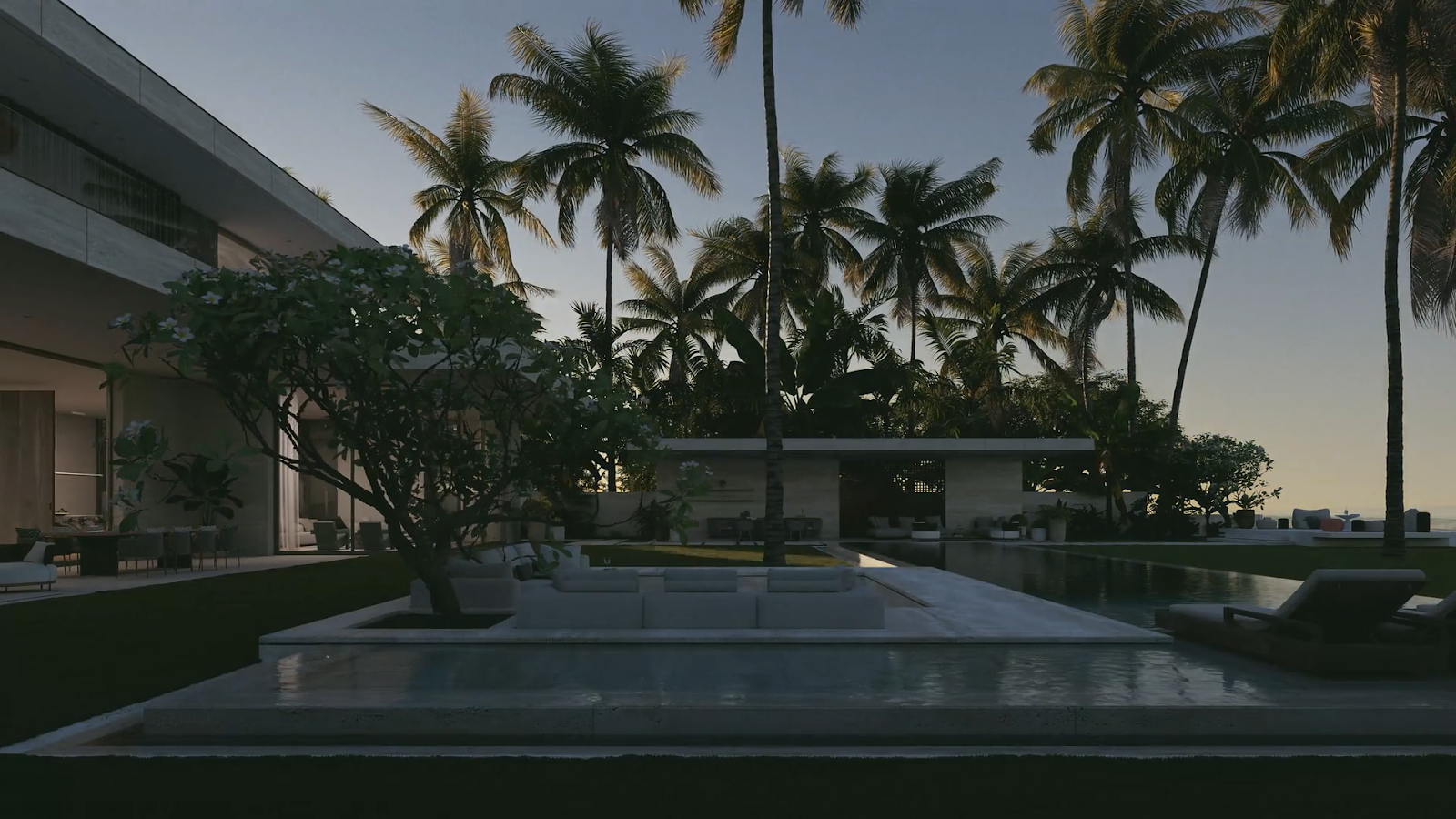
Forty years is a long time to build in private. Most developers begin with ambition and a business model. Blue Haven Real Estate began with a different premise entirely, one that had nothing to do with the market and everything to do with the conviction that a certain standard of residential construction was worth pursuing for its own sake. For four decades, the family behind the company built villas at various locations around the world, for personal use, to commission standards that answered to no one outside the family itself. No sales targets. No phased delivery pressure. No requirement to explain why a particular stone, a particular structural detail, or a particular relationship between a room and the light that entered it had been chosen. Just the cumulative discipline of building, over time, without compromise.
EOME Residences on Palm Jumeirah is what that accumulation looks like when it is finally offered to the world.
When Private Knowledge Meets A Public Project
The decision to develop EOME commercially was not a departure from the family’s approach. It was an application of it. The project extended a forty-year construction education to a site that deserved it. Palm Jumeirah’s West Crescent was that site, and the question EOME posed was whether everything learned about building a private home of genuine distinction could be brought to bear on a development of twenty-four villas without any of it being diluted.
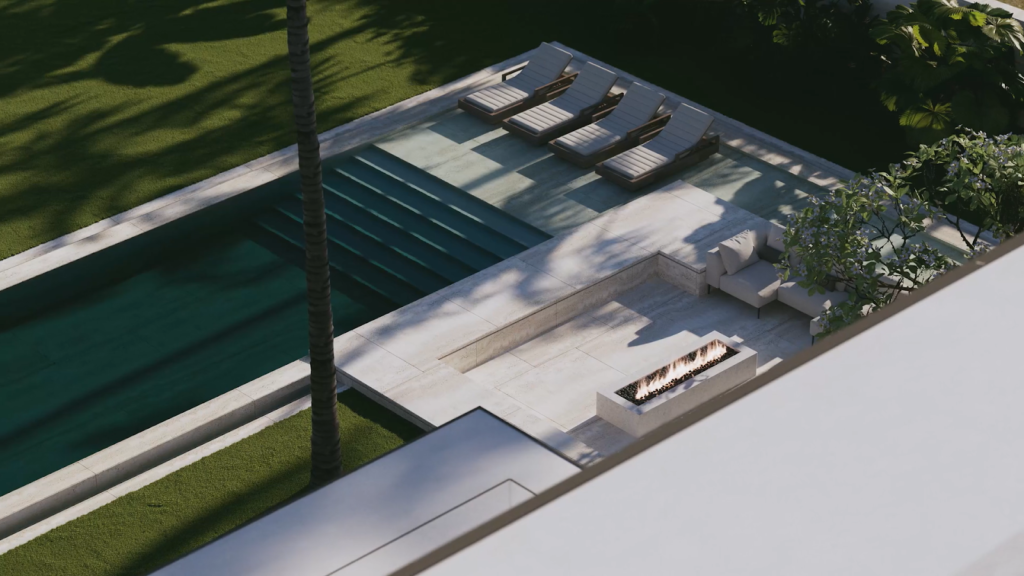
The answer required assembling a design team whose convictions matched that standard. Paul McClean was selected as architect. His residential work, concentrated primarily in Los Angeles, has earned a reputation built on restraint, material precision, and a deep understanding of how architecture serves the daily rhythms of private life rather than the objectives of the people who photograph it. His involvement at EOME was not a branding decision. It was a design decision, made on the basis of shared convictions about what a residence at this level should deliver.
“We spent four decades building privately, never for the market,” said Rami Roumi, Managing Director of Blue Haven Real Estate. “EOME is the first time we asked whether what we know how to build could be offered to someone else. The answer was yes, but only if we held the same standard we always held for ourselves.”
The Collaborators
Alexandra Fedorova brought an interior vision to EOME that operated from the assumptions of fine art rather than interior decoration. Her work treats a room as a statement of aesthetic position, executed in materials and proportions rather than in paint and canvas. The result, within EOME’s villas, is an interior language that holds up under daily occupation by people with the refined visual literacy that comes from a lifetime of engaging with exceptional things.
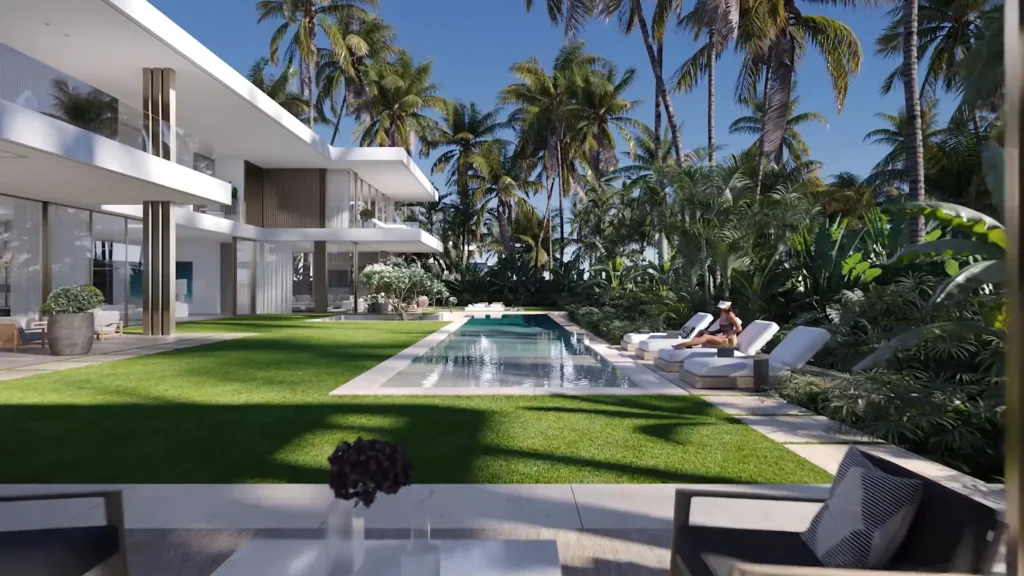
Johann Matthysen’s contribution was the land itself. As the landscape practitioner responsible for the outdoor environment at EOME, he worked within the specific conditions of the West Crescent site, where the Gulf provides a constant and powerful presence and the relationship between the water, the vegetation, and the built form determines the character of every exterior space. His approach brought ecological attentiveness to a setting where ornamental gestures would have been easy. He did not make them.
Together, and set within a site of approximately 660,000 square feet that also includes a boutique hotel, these three practitioners produced what the project required. A residential environment that would not disappoint buyers who have already owned, occupied, and moved on from the best that other markets and other developers could offer.
The Number That Tells The Story
Dubai’s total real estate market hit Dh917 billion in 2025, a record year by a meaningful margin. Within that figure, 500 properties priced above $10 million changed hands, with Palm Jumeirah leading all Dubai neighborhoods in fourth-quarter deal volume at the highest price tier. A single West Crescent villa sold for AED 161 million. These figures matter to the EOME story not because they justify pricing, but because they reflect the depth and seriousness of the global buyer pool now active at the top of the Dubai market. Those buyers do not spend AED 110 million on sentiment. They spend it on a studied determination that the asset, the address, and the builder’s pedigree meet the standard they apply to everything they own.
“We are not asking buyers to take our word for what we built,” Roumi said. “We are asking them to come and see it. Every buyer who has done that has understood immediately what forty years of private construction experience produces.“
What Three Villas Mean
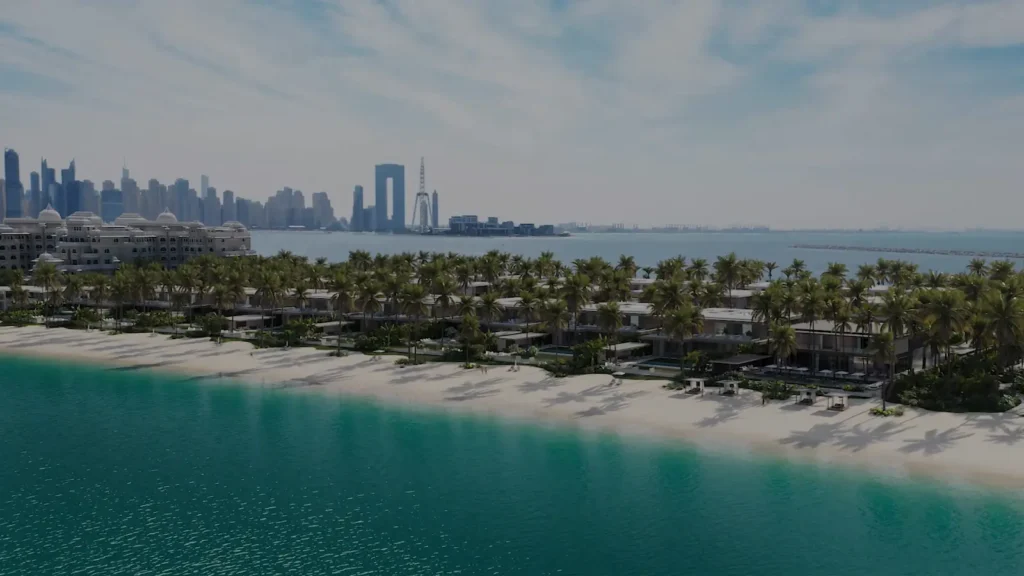
Twenty-one villas sold without a press release, a launch event, or a public-facing sales effort of any kind. Word moved through the private channels in which buyers of this kind communicate with each other and with the advisors they trust. Three villas remain. The Dubai selling season closes in April. The supply of homes above AED 60 million under construction across the emirate stands at approximately 330 units in total. The West Crescent cannot be extended.
“When these three villas sell, EOME closes,” Roumi said. “There is no second phase, no follow-on collection. What we built on Palm Jumeirah will simply be what it is, held privately, for a very long time. That is the point.“
