

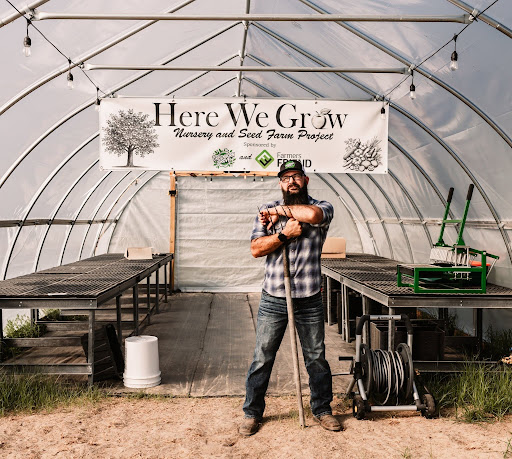
Matthew Gauger did not grow up farming. He was not raised in a multigenerational homesteading family, nor did he enter social media with ambitions of becoming a gardening educator.
Before Greenhorn Grove existed, Gauger worked in nightlife management, surrounded by crowded venues, expensive liquor and late-night schedules. By his own account, the lifestyle left him exhausted and increasingly disconnected from the kind of life he wanted long term.
The pandemic became a turning point. Like many Americans confined at home during Covid lockdowns, Gauger began experimenting with gardening. His first attempts were simple and often unsuccessful. Tomatoes were overwatered. Crops failed. Tools broke.
But the process changed him.
“There was something about growing food with your own hands that made life feel more real again,” Gauger said.
That experience eventually became the foundation for Greenhorn Grove, the online identity through which Gauger now shares videos about gardening, homesteading and practical self-sufficiency. Over the last several years, the account has grown into one of the larger creator platforms in the homestead space.
Unlike many influencer brands built around polished aesthetics, Gauger’s content often emphasizes mistakes and learning curves. His videos are intentionally conversational. He frequently reminds followers that he is still learning himself.
That framing has resonated with audiences who feel excluded by highly technical or perfection-driven online spaces. Many followers are beginners looking for accessible information rather than advanced agricultural instruction.
The educational side of the project expanded with the launch of The Greenhorn Guides, a free online library of e-books and videos covering topics such as gardening, preserving food, livestock care and small-scale homestead systems.
The guides are designed to remove cost barriers. Gauger says the decision to make everything free came from frustration with how much beginner information online is hidden behind subscriptions or courses.
“Education should be given freely,” he said.
The project arrives during renewed national conversations about food security and local resilience. USDA data shows that food insecurity increased in the United States in 2023, affecting more than 47 million Americans. Rising grocery costs and climate disruptions have also increased interest in household food production.
Gauger’s response has been to push beyond digital education into community projects. Through Here We Grow, his nonprofit organization, he plans to distribute seed kits and help establish community gardens and homesteads in partnership with schools, churches and local groups.
The organization has also become involved in disaster recovery efforts in western North Carolina following Hurricane Helene.
Despite the rapid growth of his audience, Gauger remains skeptical of internet fame itself. He often contrasts his current life with the nightclub industry he left behind years ago, describing social media not as a personal branding exercise but as a tool that can direct people toward offline relationships and practical skills.
That tension sits at the center of his work: using highly modern platforms to encourage slower, more local forms of living.
Whether those efforts become a lasting institution remains unclear. Creator-driven organizations often struggle to outgrow the personality at their center. But Gauger’s audience appears less attached to spectacle than to consistency.
For many followers, the appeal is not that he presents an idealized rural life. It is that he presents one still in progress.