
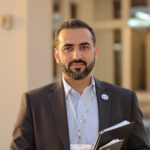
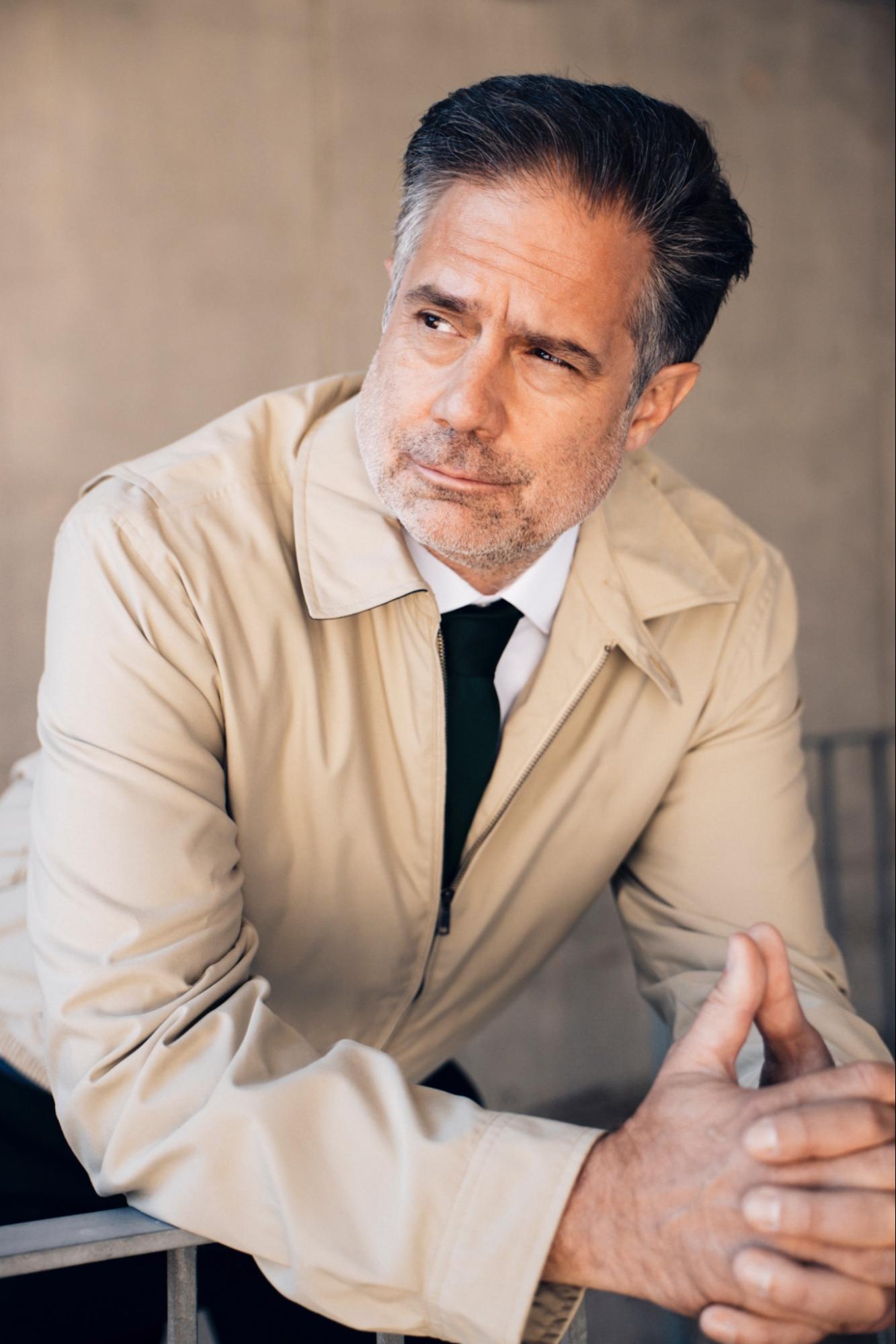
Dr. jur. Can Ansay does not fit cleanly into any of the categories that usually explain a person like him. He is not a doctor, though his mother and sister are physicians and his company has put more than three million medical treatments into the hands of patients across Germany. He is not, by training, a technologist, though the spark for his company was an AI symptom-checker that in 2012 diagnosed an ailment his own doctors had missed and now runs one of Europe’s most closely watched digital health platforms. He is a lawyer. A doctor of law, specifically, with a judicial internship on his record and a father who spent his career as a law professor. Growing up between the worlds of medicine and law gave him an unusually broad perspective, one that later shaped his approach to digital healthcare.
That in-between quality is not incidental to who he is. It may be the whole story.
Building Between Disciplines
Growing up in a family shaped by both medicine and law, Ansay developed a perspective that drew on both disciplines rather than being defined by only one. When he launched a digital sick-note service in 2018, the doctors’ associations that might have been expected to treat a lawyer’s health-tech venture as a curiosity treated it instead as a threat, publicly and repeatedly. He was, in their eyes, an outsider building something that belonged to their profession, without belonging to it himself. The regulators who scrutinized the service saw a similar mismatch: a legal mind operating in a domain usually left to clinicians and administrators. Ansay’s response to being treated as an outsider in a field he was determined to remake was not to seek belonging on the establishment’s terms. It was to keep building until the establishment’s own institutions, Germany’s statutory health insurers among them, adopted a version of what he had built.
Building across disciplines required confidence, particularly in a field where most founders come from more conventional professional backgrounds. Most founders in regulated industries at least share a credential with the people they are trying to serve or disrupt. His legal training gave him a perspective that complemented, rather than replicated, the expertise of physicians and technologists. What he had instead was a law degree that let him read the actual boundaries of what was permitted more precisely than either group, and a conviction that being welcome mattered far less than being useful to the patients the system had overlooked.
A Mission That Predates the Company
Ansay traces his own motivation not to a business opportunity he spotted, but to something closer to a personal creed about what kind of people change things. He has cited the automotive pioneer Carl Benz as an inspiration, not for the invention itself but for the position Benz occupied while making it: “This moment inspires me, when people decided to do something even though everyone else was against it. This is such a magic thought that inspires me to tears, actually.”
It is a striking thing for a health-tech founder to name as his emotional touchstone, not a growth metric or a funding milestone but the specific feeling of building something while the people around you are certain you are wrong. It suggests his unconventional background became an advantage rather than a limitation. It was closer to a precondition for the mission itself, evidence that he was standing somewhere no one else had thought to stand, which is precisely where he believed the most overlooked patients also stood, unable to get a sick note, a prescription, or a cannabis treatment through channels that were not built with them in mind. His own way of putting it is disarmingly plain: he wants, as he says, to make people happy, by making healthcare radically simple, good, and affordable.
What the Distance Made Possible
None of this makes Ansay a rebel in the conventional sense. He built his company with five thousand euros and no outside investors, not out of contrarian posturing but because he never had, and evidently never wanted, the kind of institutional backing that comes with an obligation to look like everyone else in the category. His ability to connect perspectives from medicine, law, and technology proved central to the company’s development. It was the condition that let him see what an insider, comfortable inside any one of those worlds, might never have thought to question in the first place.
He is, by his own account, still building for people who feel like outsiders to their own healthcare system, which may be the closest thing to a unifying theory of who Can Ansay actually is: someone who found, by working across disciplines, a clearer view of where the healthcare system was failing patients.