
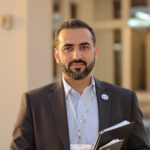

The phone number spells the name of the firm. 833-FOR-PIRI. It is a small piece of marketing and it tells you exactly who the office expects to hear from: somebody who caught the number once, in a hurry, probably on a day that had already gone badly, and had to be able to remember it.
Michael Piri’s practice sits on Ross Avenue in downtown Dallas and covers immigration, immigration detention and habeas corpus, criminal defence, crimmigration, personal injury and family law across the Dallas–Fort Worth area. The list is broad by design. The cases that interest him tend to be the ones that refuse to stay inside a single category.
His route to Ross Avenue ran through Paris. He read International Politics and International Law at the American University of Paris, graduating with honours, and interned at the International Court of Arbitration. He came back to the United States for his law degree at Saint Mary’s University School of Law in San Antonio.
The distance between those two settings is the interesting part of the biography. International arbitration is the most orderly room in law. Parties consent to be there. Everyone has counsel. The timetable is negotiated. Removal proceedings are the opposite of all of that. One side has the government’s resources, the other frequently has no lawyer at all, and the clock runs whether or not anybody understands what is happening.
Both run on the same underlying question, which is what a person is entitled to when they are standing inside a legal system that is not their own. Arbitration asks it of companies. Removal proceedings ask it of a father who has been in Texas for nineteen years.
“The first thing you learn is how much of the outcome is decided by whether anyone competent was standing next to the person in the first week.”
Much of the firm’s client base is Spanish-speaking, and Piri works in English, Spanish and French. The reviews the firm publishes come back to the same two points with some regularity: that he listens, and that he answers in Spanish. Those sound like soft qualities. In a practice where the decisive facts are often an old arrest, an entry date the client is embarrassed about, or a marriage that is more complicated than the paperwork suggests, they are the mechanism by which the real file gets built at all.
The published outcomes are modest in scale and consequential in effect. Work authorisation granted in under a month for a client whose residency case was still pending. A Dallas County DWI dismissed after two months. More than $60,000 recovered for a woman who had been persuaded that a one-year marriage entitled her to nothing. A Mexican national who had fled persecution, detained in Texas, cleared through the credible fear stage and released on bond.
Underdog is a word that flatters the lawyer more than the client, and it slightly misdescribes what is happening. The clients are not underdogs in some general sense. They are people whose specific problem crosses a line that most firms have drawn through the middle of their own practice, and who therefore keep being told that this office does not handle that.
The firm publishes three principles, which amount to listening first, explaining clearly and fighting with purpose. The middle one carries the most weight and gets the least attention in legal marketing, probably because it is the only one that regularly requires telling a client something they did not want to hear.
“Nobody is short of lawyers in this city. They are short of a lawyer who will take the whole problem.”
The firm reports between 25 and 40 staff to the State Bar of Texas. It runs a free 30-minute consultation and works on contingency, flat fees or payment plans depending on the matter. Those are commercial arrangements and they are also the mechanism that lets a harder case through the door. A practice that only took retainers paid up front would see a different set of clients entirely, and would never hear about most of the cases Piri has built the firm around.
Which is, in the end, the point of the number that spells the name.