

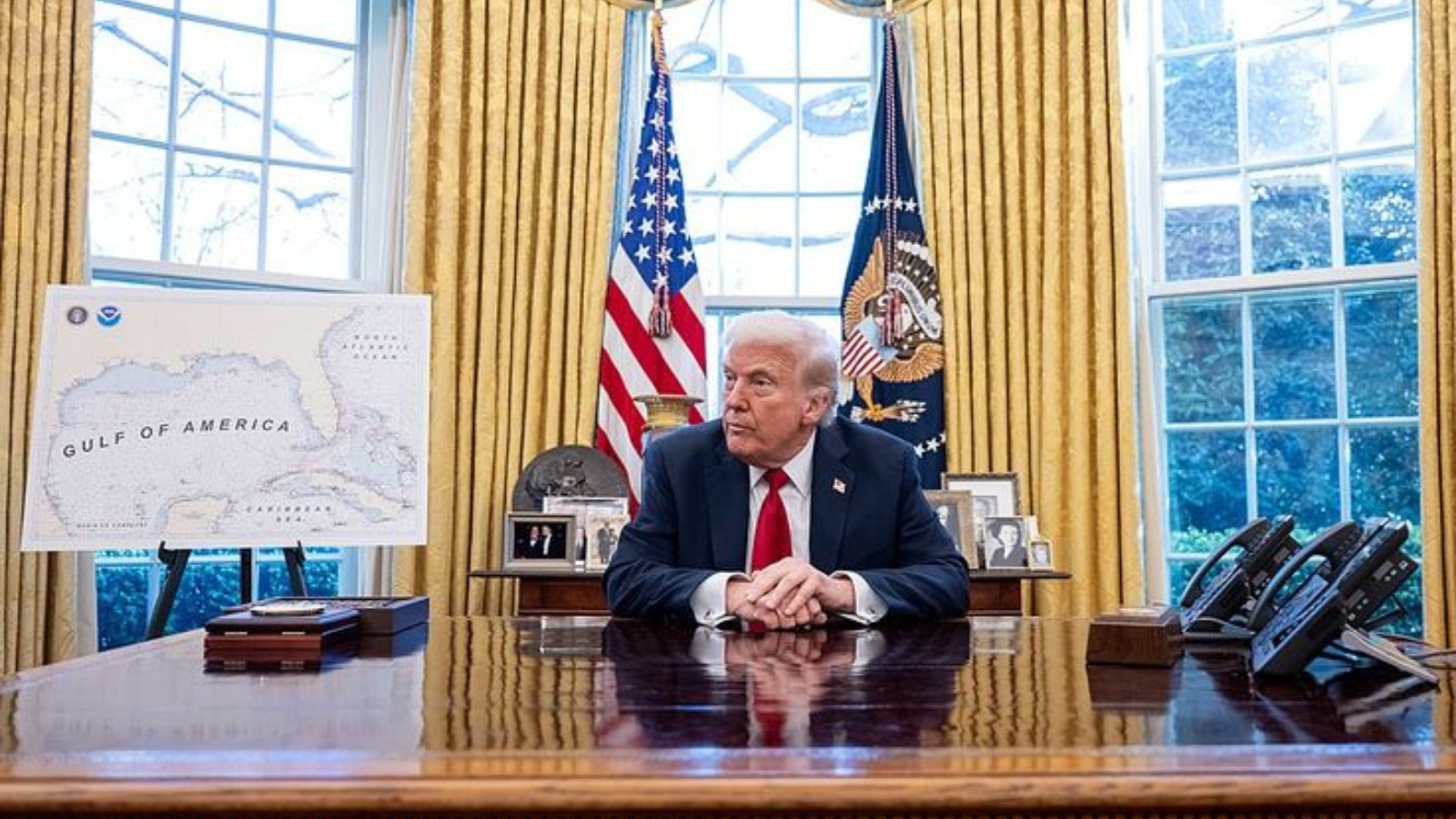
Donald Trump has once again stirred debate over territorial ambition, invoking the United Kingdom’s handling of the Chagos Islands as a cautionary tale while revisiting his long-standing interest in acquiring Greenland. In recent remarks, Trump framed the UK’s decisions regarding the Indian Ocean archipelago as short-sighted, suggesting that Western powers risk losing strategic leverage when they relinquish control over key locations.
The Chagos Islands, a remote but geopolitically significant chain, have been the subject of decades-long disputes involving sovereignty, indigenous displacement, and international legal rulings. Trump’s critique appears to center on what he characterizes as a broader pattern of Western retreat. By drawing parallels to Greenland, he signals that territorial control remains, in his view, an essential component of global influence in an increasingly competitive geopolitical environment.
While Trump’s earlier attempt to purchase Greenland from Denmark in 2019 was widely dismissed as unconventional, his renewed rhetoric indicates that the idea still resonates within certain strategic circles. The Arctic territory, rich in natural resources and positioned along emerging shipping routes, continues to attract attention as climate change reshapes global trade dynamics.
Chagos Islands as a Symbol of Strategic Drift
The Chagos dispute has become emblematic of the tensions between historical governance and modern international expectations. The UK’s decision to separate the islands from Mauritius in the 1960s and later facilitate the establishment of a U.S. military base on Diego Garcia has drawn sustained criticism. International courts and the United Nations have called for the return of the territory to Mauritius, framing the issue as one of decolonization and justice.
Trump’s remarks reinterpret this complex history through a strategic lens, emphasizing what he sees as the risks of ceding territory under external pressure. His characterization of the UK’s approach as misguided reflects a broader skepticism toward multilateral institutions and legal frameworks that challenge traditional notions of sovereignty.
For observers, this framing underscores a fundamental divide in how global leadership is understood. On one side is a rules-based order that prioritizes international consensus and legal accountability. On the other is a more transactional view, where territorial control and strategic advantage take precedence over diplomatic considerations.
Greenland and the Arctic Stakes
Greenland occupies a unique position in global geopolitics, combining vast untapped resources with critical geographic importance. As Arctic ice continues to recede, new shipping lanes are opening, shortening transit times between major markets and increasing the region’s economic potential. At the same time, the presence of rare earth minerals and energy reserves has heightened competition among major powers.
Trump’s renewed interest in Greenland reflects these evolving realities. His earlier proposal was met with firm resistance from Denmark and Greenlandic officials, who emphasized the island’s autonomy and rejected the notion of a sale outright. Yet the underlying strategic rationale has only grown stronger in the years since.
The Arctic has become a focal point for geopolitical rivalry, with countries like Russia and China expanding their presence and investments in the region. Against this backdrop, Trump’s comments can be seen as an attempt to reframe the conversation around Western engagement, suggesting that proactive acquisition or partnership may be necessary to maintain influence.
Political Messaging and Global Implications
Beyond the specifics of Chagos or Greenland, Trump’s statements serve a broader political purpose. They reinforce a narrative of assertive leadership and challenge what he portrays as the complacency of traditional allies. By linking disparate issues under a common theme of strategic oversight, he appeals to audiences concerned about shifting global power dynamics.
Critics, however, argue that such rhetoric oversimplifies complex international issues and risks inflaming tensions. The comparison between Chagos and Greenland overlooks significant legal, cultural, and political differences, raising questions about the practicality of treating them as analogous cases.
Nevertheless, the discussion highlights an ongoing reassessment of how nations approach territory, sovereignty, and influence in the 21st century. As climate change, resource competition, and shifting alliances reshape the global landscape, debates over land and control are likely to intensify.
Trump’s remarks, while controversial, tap into these broader currents. They reflect a world in transition, where traditional assumptions are being questioned and new strategies are being proposed, often in unexpected ways.