

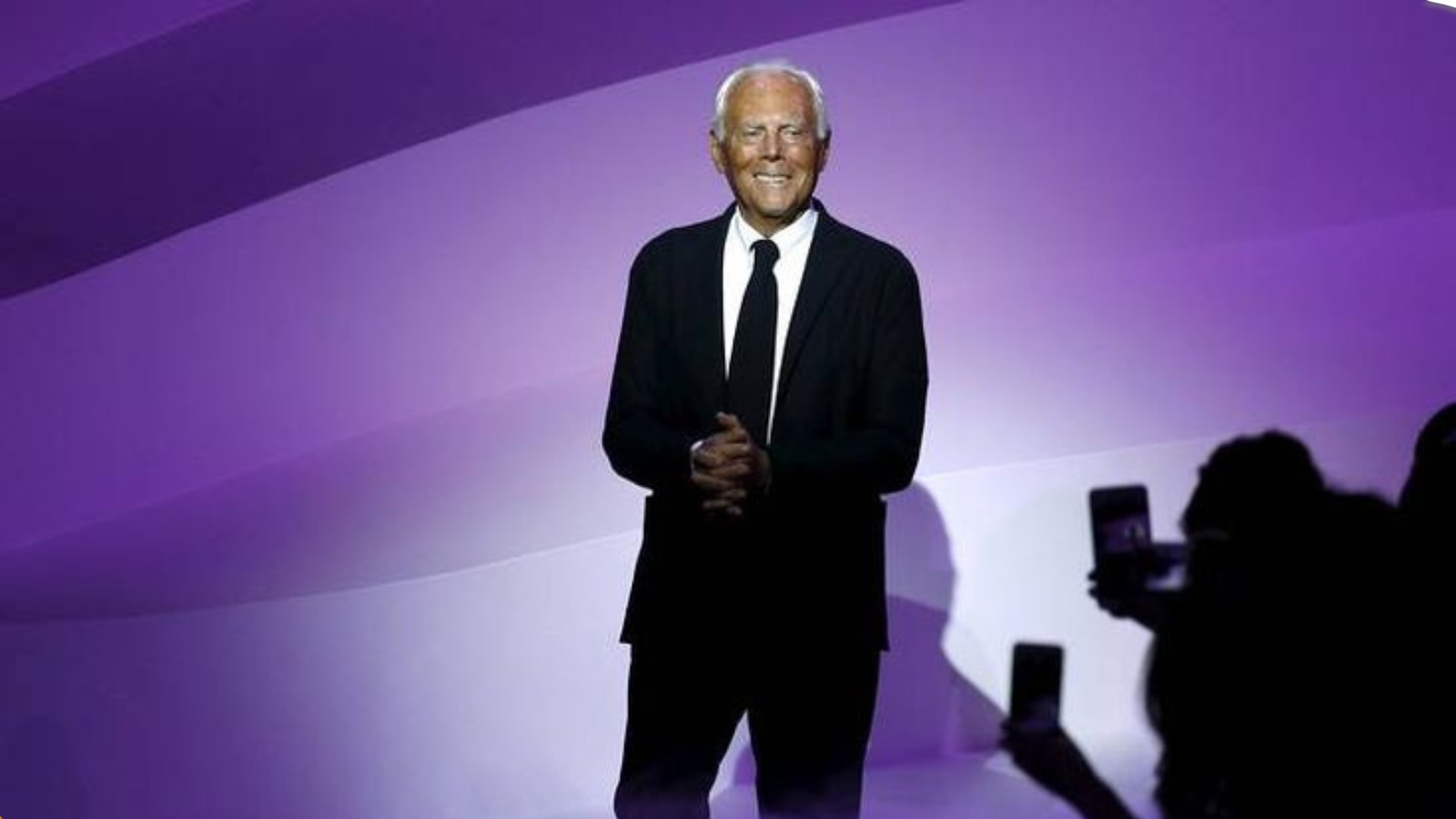
For nearly five decades, Giorgio Armani has been more than a designer. He has been the architect of a global aesthetic rooted in restraint, precision, and quiet authority. His name became synonymous with a distinctly Italian vision of elegance, one that resisted excess and instead favored fluid tailoring and muted palettes. As conversations around succession have intensified in recent years, the industry has been left wondering what Armani could look like without its founder at the helm.
That question is no longer theoretical. Recent showcases and internal shifts have offered the first tangible indications of how the brand might evolve beyond Giorgio Armani’s direct creative control. While the founder remains an active presence, the emerging direction signals a gradual but deliberate transition, one that aims to preserve the house’s DNA while adapting to a new fashion landscape.
The weight of this moment is not lost on industry insiders. Armani is one of the last major independent fashion houses still closely tied to its founder. Any movement toward a post-Giorgio identity carries both symbolic and commercial significance, making this transition one of the most closely watched in luxury fashion today.
Subtle Shifts in Design Language
What stands out in the latest collections is not a dramatic reinvention but a nuanced recalibration. The silhouettes remain unmistakably Armani, characterized by relaxed tailoring and an emphasis on comfort. However, there is a noticeable lightness in construction and a willingness to experiment with texture and layering in ways that feel slightly more contemporary.
Color has also taken on a more exploratory role. While the brand’s signature neutrals remain central, there are moments of unexpected vibrancy that suggest a broader emotional range. These choices hint at a design team that is carefully testing the boundaries of the house code without disrupting its core identity.
This balancing act is critical. Luxury consumers often seek continuity, especially from heritage brands. At the same time, relevance demands evolution. The emerging post-Giorgio direction appears to recognize that tension, opting for incremental innovation rather than abrupt change. It is a strategy that aligns with Armani’s long-standing philosophy of understated sophistication.
Leadership Beyond the Founder
Behind the scenes, the transition is as much about leadership as it is about design. Armani has built a deeply structured organization over the years, with trusted collaborators and executives who understand the brand’s ethos intimately. This internal continuity may prove to be one of its greatest strengths as it navigates a future without its founder’s daily oversight.
There is growing attention on how responsibilities are being distributed across creative and managerial teams. While no single successor has been formally positioned as the face of the next era, this collective approach suggests a model that prioritizes stability. It reflects a broader shift in fashion, where creative direction is increasingly supported by multidisciplinary teams rather than singular visionaries.
At the same time, the brand must contend with the expectations that come with its legacy. Armani is not just a label but an institution. Maintaining its relevance in a fast-moving industry while honoring its heritage will require careful stewardship, particularly as younger audiences engage with luxury in new and often unpredictable ways.
The Industry Watches Closely
The significance of Armani’s transition extends beyond the brand itself. It represents a broader moment in fashion, where several iconic houses are confronting questions of succession and longevity. How Armani manages this shift could serve as a blueprint for others facing similar challenges.
Editors and buyers have noted a renewed sense of curiosity surrounding the brand. The latest presentations have drawn attention not because they break radically from the past, but because they suggest a thoughtful evolution. There is an understanding that the true test will unfold over time, as the post-Giorgio identity becomes more defined.
For now, what the fashion world has seen is a careful opening chapter. It is a glimpse of a house in transition, grounded in its heritage yet cautiously looking ahead. In an industry often driven by spectacle, Armani’s measured approach stands out. It reinforces the idea that legacy, when handled with intention, can be a foundation for reinvention rather than a constraint.