

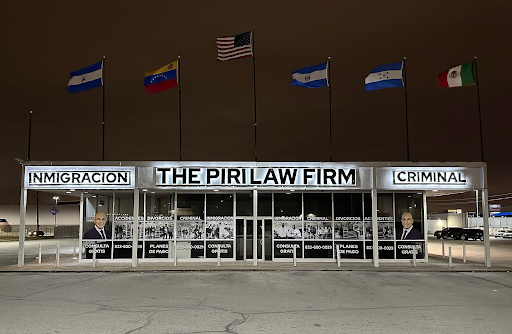
Most law firms ask clients to categorize their problems. A car crash belongs to one office. A criminal charge belongs to another. An immigration question belongs somewhere else entirely. The Piri Law Firm has built its identity around rejecting that separation, offering personal injury representation informed by crimmigration insight—the legal understanding of how criminal and immigration systems collide.
Under the leadership of personal injury and immigration lawyer Michael Piri, that dual focus gives clients something many do not realize they need until it is almost too late: legal counsel that sees how a single event can ripple across multiple parts of a life at once.
For immigrant families in Texas, those overlaps are not theoretical. A traffic accident can lead to injuries, lost income, an insurance dispute, and a citation that carries immigration consequences. A workplace injury may sit alongside an unresolved immigration matter or a prior criminal record, altering how every legal decision is weighed.
Where Injury Law And Crimmigration Meet
The term “crimmigration” is often described in abstract terms, but its consequences are practical and immediate. The word refers to the point at which criminal law and immigration law begin to shape one another, often with consequences more severe than a client expects.
A minor plea in criminal court may become a serious obstacle in immigration court. A traffic-related charge that appears manageable on paper may later affect status, relief options, or future applications. When an injury case is moving at the same time, those consequences can multiply rather than remain confined to one file.
That is where crimmigation firms, like The Piri Law Firm, can offer a different kind of counsel. The firm’s injury work is informed by the reality that many clients, especially undocumented or mixed-status clients, cannot treat it as a civil claim separate from immigration risk. A straightforward recommendation to file suit or accept a resolution may be incomplete if no one has studied what else sits in the background.
That wider view matters in cases that seem ordinary at first glance. Piri adds, “People come in with one problem on the surface and three more underneath it. If you only handle the visible problem, you may be creating a bigger one.”
A rear-end collision may produce whiplash, medical debt, and a traffic citation. A bar fight may result in both injuries and a criminal charge. A construction-site accident may leave an undocumented worker choosing between silence and a claim that could intersect with prior immigration concerns.
Piri’s dual focus allows those choices to be evaluated together rather than in isolation. The injury side of the case is built with care and with an awareness of what admissions, pleas, or records might mean in another courtroom later. This reflects the belief that these systems should be read together much sooner, especially for immigrants whose lives are more exposed to their overlap.
What Dual Insight Looks Like In Practice
The Piri Law Firm’s immigration and personal injury legal services begin with intake. New cases are not treated solely as injury matters or solely as immigration matters based on the client’s first description of the problem. Staff and attorneys ask broader questions: What exactly happened? Was law enforcement involved? Were charges filed, even minor ones? Does the client have a pending immigration case, a prior order, or a family petition underway? Those questions may lengthen the first conversation, but they narrow the risk of discovering critical facts too late.
For an injured client, this means the legal strategy is built on two tracks from the outset. One track deals with the personal injury case in familiar terms—liability, medical records, future treatment, wage loss, and insurance negotiations. The other track studies any criminal or immigration exposure that could change the client’s options or their comfort with different legal paths.
That sensibility can quickly alter practical decisions. A client may think a fast plea to a traffic charge is the best way to move on after an accident, but a crimmigration-aware review might reveal that the wording or statutory basis of that plea could create avoidable problems later.
For another instance, an undocumented worker may hesitate to pursue compensation after a workplace injury because of fear about their status, yet a lawyer who understands both personal injury and immigration realities can explain that, regardless of their status, they can still file an injury claim. They can better explain where the true risks lie and where myths are suppressing valid claims.
A firm without that dual lens may either overreact or underreact. That firm is better positioned to provide careful and strategic advice.
Why Clients Benefit From A Wider Legal View
Clients often come to law offices hoping for relief from confusion. What they find instead is sometimes a more fragmented version of the problem they already had. One lawyer explains the claim. Another explains the charge. Another warns about immigration consequences after the crucial choices have already been made.
The burden of connecting those dots falls back on the client, who is usually the least prepared person in the room to do it. A firm that offers personal injury services backed by crimmigration insight reduces that burden by treating the overlaps as the lawyer’s work, not the client’s homework.
That perspective can be especially important for the Latin community in Texas, where families often face layered vulnerability. One person may be undocumented, another may be a citizen child, another may depend on the injured worker’s wages, and a single legal misstep can affect all of them. Firms that see only one legal question at a time may miss the fact that every recommendation has a household dimension. Piri’s dual practice treats that reality as central rather than peripheral.
There is, of course, no single model that can eliminate all risk in cases involving injury, criminal exposure, and immigration status. Piri mentions that hard facts remain hard facts. Weak claims remain weak claims. Some outcomes are limited by law, evidence, or timing, no matter how thoughtful the lawyer.
Yet above all these, The Piri Law Firm believes clients deserve more than compartmentalized advice when risks are high. They are better served when limits are explained in the context of the whole problem rather than in one isolated segment.
To achieve this, clients need a service style like The Piri Law Firm that asks more questions up front, takes longer to explain, and aims for outcomes that remain sound after the immediate crisis has passed. For clients whose lives rarely fit neatly inside one legal category, that may be the strongest kind of counsel a firm can offer. What it promises are not easy results, but a more honest and complete form of legal guidance.
Please visit The Piri Law Firm’s website for more information on its crimmigation services.