

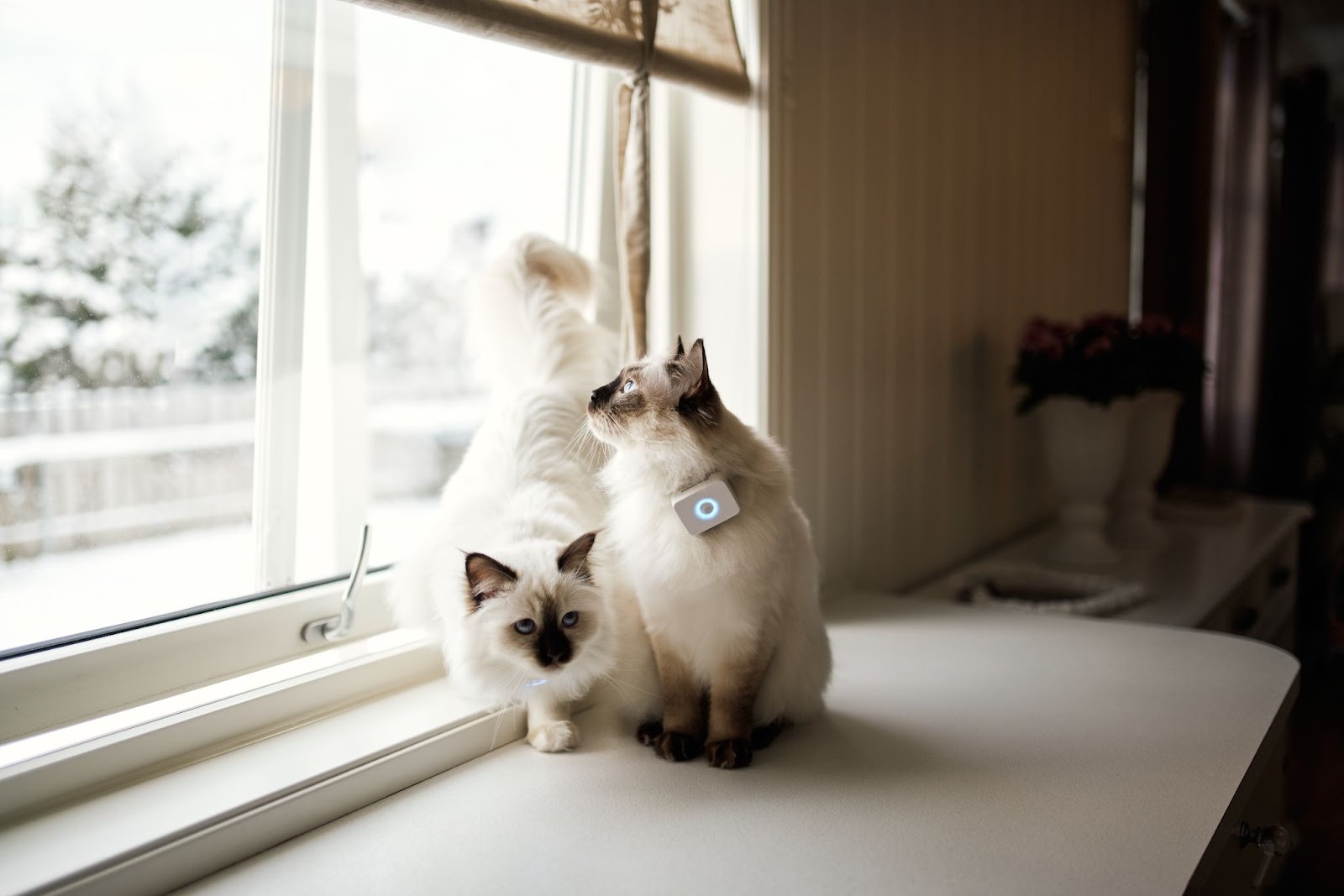
On a winter evening in Trondheim, the posters on the lampposts are strangely blank. For many years, the paper pleas were a familiar part of urban life: a child’s scrawl, a blurry photograph, a phone number, and a single word in block letters—“MISSING.” Today, in many Norwegian neighborhoods, where cats once slipped silently between houses and highways, those posters are quietly disappearing. In their place, anxious owners now reach for a smartphone, opening an app that renders their cat’s secret life in glowing strokes of GPS data and activity graphs.
The device responsible is scarcely larger than a postage stamp, 3x4cm, 28g, sealed against snow and puddles, and clipped to a breakaway collar. It rides unnoticed on the shoulders of roaming cautious tabbies, logging every foray across garden fences and every detour into a neighbor’s kitchen. The tracker is called Lilcat, a feline offshoot of the Norwegian pet‑tech firm Lildog, and its promise is simple enough: to render visible what has always been invisible, to turn a cat’s nocturnal wanderings into information a human can act on.
Yet the story now unfolding around Lilcat is larger than a single product or one country’s affection for its animals. Across the globe, a wave of new technologies, such as collars, tags, cameras, and biometric wearables, is remaking how people think about pet ownership. The global pet tech market, worth billions in 2024 and projected to more than double by 2030, is growing quickly as owners demand safety, insight, and a closer sense of connection to their animals.
Behind those numbers lies a question: as people gain unprecedented visibility into the lives of creatures that once lived just beyond the edge of human understanding, what is being gained, and what, if anything, might be lost?
In Norway, that question has a name and a face in Morten Sæthre, the founder and spokesperson who helped steer Lildog into one of Europe’s fastest‑growing GPS brands and then turned that experience toward the elusive world of cats. He describes a technological shift that began with a simple realization: most outdoor cats live double or triple lives, and until recently, no one really knew where those lives unfolded.
A Silent Boom In Pet Surveillance
The pet tech boom of the mid‑2020s did not announce itself with a single breakthrough or iconic gadget. Instead, it seeped in gradually as pet ownership rose and families increasingly treated cats and dogs as full‑fledged members of the household. In this climate, paying subscription fees to know where a pet is began to feel less like a luxury and more like a kind of digital insurance policy.
The segment focused on safety and wearables is among the fastest‑expanding, propelled by urbanization, outdoor‑roaming pets, and fears about traffic, predators, theft, and extreme weather. “Real‑time tracking” has shifted from a marketing slogan to a baseline expectation; owners increasingly assume that if they can track a parcel or a rideshare driver, they should also be able to track the animal sleeping at their feet.
That expectation has put pressure on the companies building the underlying hardware. Traditional GPS collars, designed for open fields and clear skies, often struggled under real‑world conditions: narrow urban courtyards, concrete basements, Nordic snowstorms, and patchy cellular coverage.
Lildog, the parent brand behind Lilcat, set out to solve those pain points by embracing newer cellular standards such as NB‑IoT and LTE‑M, networks engineered for low‑power devices that must cling to a signal where older systems might fail. Their trackers are lightweight, waterproof, and shockproof, built to withstand mud, snow, and the rough play of large dogs—or the tight squeeze of a cat slipping under a fence.
Within a few years, the company’s devices had won shelf space in hundreds of stores, from specialist pet chains to Norway’s largest veterinary pharmacy, which chose them as its sole GPS offering. Retailers reported dropping rival trackers altogether in favor of the Norwegian brand, citing coverage and reliability. The firm’s geographic reach remained modest in absolute terms, but within the niche of Nordic‑engineered GPS for pets, it had become, in the words of one buyer, “the only devices we will sell going forward.”
Amid this tightening competition, Sæthre noticed something: while dogs had become the default animal for connected gadgets, cats were lagging. “The industry behaved as if cats were small dogs that refused to wear devices,” he recalls. “But cats live fundamentally different lives. They roam farther, they hide more, they squeeze into tighter spaces. The engineering bar is higher if you really want to track them.”
Mapping The Secret Lives of Cats
The secret life of outdoor cats has been the subject of anecdote, folklore, and the occasional radio‑collar study. Owners told stories of pets who vanished for days and returned heavier, sporting the distinctive air of an animal that had eaten well. What those stories lacked was data. Lilcat promises to supply that missing layer of evidence, drawing borders around what had been a matter of speculation.
The Lilcat tracker mirrors its canine cousin in many respects: the same compact housing, the same 28g weight, the same integration with a smartphone app that charts location history, activity patterns, and even environmental conditions. It attaches to a cat‑safe collar designed to release under strain, reducing the risk of strangulation if the animal catches on a branch or fence. Through the app, owners can watch a live map, scroll back through a day’s wandering, or compare a week’s worth of pacing on the kitchen floor with previous months.
The patterns that emerge can be surprising. Company materials hint at one of its findings with a simple phrase: most cats have more than one home. Asked what that looks like in practice, Sæthre offers a story that doubles as a quiet indictment of human obliviousness. In one suburb, he says, a cluster of tracked cats showed regular routes that included at least two separate houses for food. One cat had three households feeding it a premium diet; none of the humans realized they were part of a shared schedule.
For veterinarians, those routes are not just amusing; they can explain health problems that previously appeared out of nowhere. In an era when obesity is increasingly common among pets, an owner trying to manage a cat’s weight with carefully measured portions can see those efforts undone by a neighbor who sets out a communal bowl. “The risk is not just that they get a bit round,” Sæthre notes. “They can be fed the wrong food for their condition, or simply too often, and suddenly they are off the chonk‑charts, as some of our customers like to say.”
Then there is the more dramatic side of the map: the sudden stops, the long pauses that trigger anxiety. Lilcat’s live tracking is designed for precisely those moments. Owners can open the app, switch to real‑time mode, and follow their cat’s movements second by second. A device that once seemed like a curiosity becomes, in that instant, a kind of digital lifeline. Built‑in sound and light functions, introduced in newer devices, can help locate an animal trapped in a shed or locked inside a garage at night.
According to Sæthre, technology is now replacing the old posters once taped to lampposts, marking the end of the era of missing cats. He believes that with innovations from Lilcat, there should be no more cats locked in garages or sheds, trapped in empty pools, or lost deep in the woods after being chased away by other animals or dangerous individuals. Even when disappearances occur due to uncontrollable circumstances, these modern devices make finding and returning lost pets far easier and faster.
Technology That Adapts To Cat Culture
The scientific literature on feline navigation describes magnetoreception, the ability of certain animals to sense the Earth’s magnetic field as an internal compass. Experiments suggest that cats may use this sense to orient themselves and return home over unfamiliar terrain. Yet those same studies note a vulnerability: intense stress, urban noise, and electromagnetic interference can disrupt the signal.
For Lilcat’s creators, that vulnerability has been seized on as both a design constraint and a moral imperative. In dense cities, where concrete canyons and electronic clutter muddle magnetic cues, the company argues that cats face a navigation problem their wild ancestors never had to solve. GPS and cellular‑assisted location, by contrast, were built for precisely this environment.
The company’s decision to rely on low‑power wide‑area networks is meant to ensure that the tracker works in basements, backyards, and distant cabins alike, offering, in its marketing phrase, effective unlimited range.
Sæthre mentions, “Cats do not have built‑in GPS. They have, at best, a vague compass function that points them in roughly the right direction when conditions are favorable. In our modern world, full of environmental noise, that compass is not always enough. We are not trying to replace their instincts; we are trying to back them up.”
A New Cartography Of Trust
Behind the tidy interface and the expanding market forecasts lies a more intimate shift in how people understand risk, responsibility, and trust in their relationships with animals. When a cat slips out at dusk, its owner now faces a choice: to let it vanish into the night, or to follow its movements in real time on a familiar grid of streets and yards. Neither option is entirely comfortable.
For those who adopt the technology, the change is immediate. The old drama of disappearance is replaced by a quieter, more analytical form of worry. A blinking icon on a screen can show a pet stuck in the exact location for hours, or it can reassure with a trail of gentle loops through a known territory. In either case, the owner’s experience of anxiety has been translated into data and notifications.
“The surprising thing we discovered is that the technology does less to change the cat than to change the human,” he says. “When owners see where their cats actually go, many become less anxious and more respectful. They stop assuming the animal is helpless. They realize it has a complicated social and territorial life that existed long before the app. The device does not domesticate the cat; it domesticates the owner’s imagination.”
In Norway, Lilcat’s early adopters tend to speak more about a modest gain: peace of mind. Some discover that their animal roams less than they feared; others learn that their pet is, in effect, part of a loose neighborhood network, visiting multiple households in a single evening. In both scenarios, the tracker’s presence can reshape human relationships. A conversation with the neighbor who has been feeding the same cat may become easier when both parties can point to the same map.
Asked where this trajectory might lead by 2030, Sæthre does not talk first about revenue or market share. Instead, he returns to the lampposts that once carried all that grainy hope. “In the end, our job is not to keep cats from being cats,” he says. “It is to give humans enough clarity that they can let their animals be themselves without drowning in worry. If we succeed, there will be fewer posters on the lampposts, and more people sleeping through the night while their cats do what they have always done—explore a world we are only just learning how to see.”