
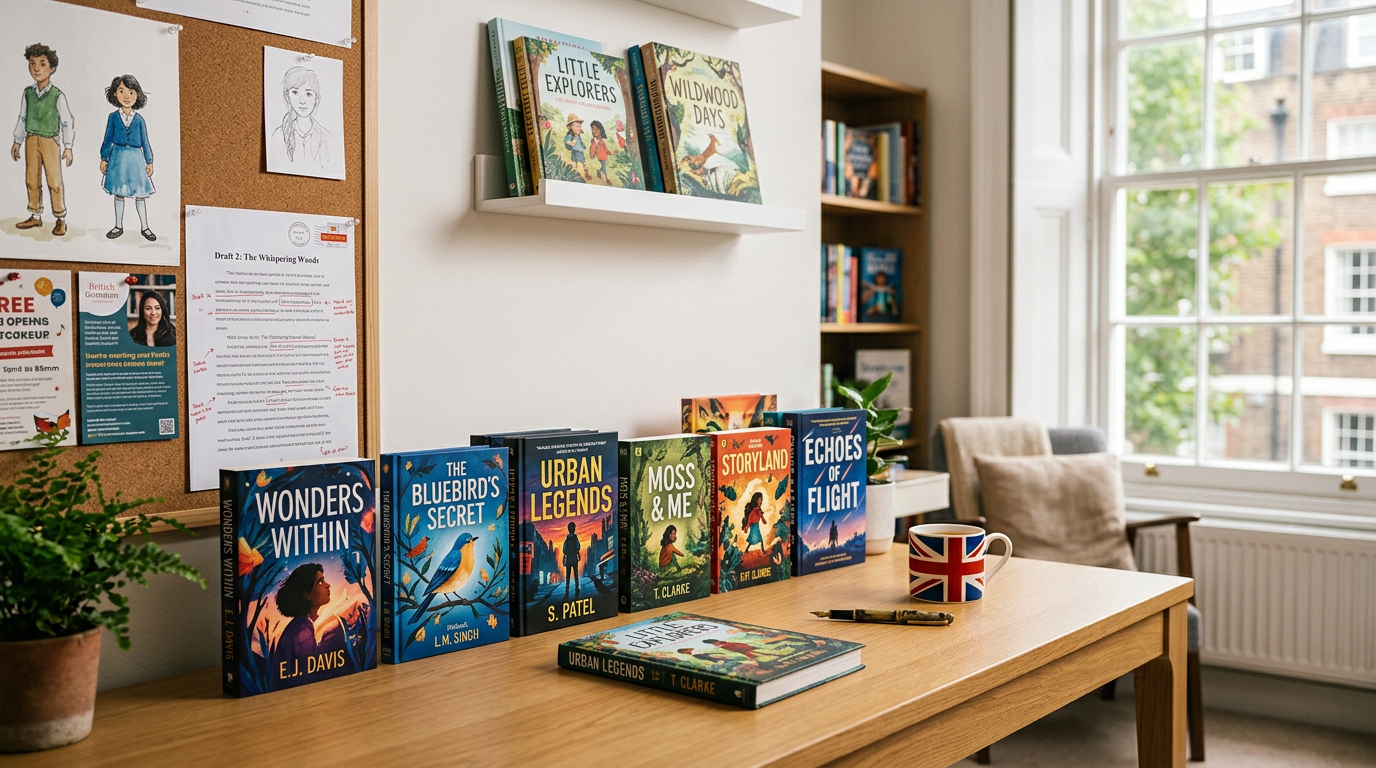
There was a time when childhood had more silence in it. Boredom existed. Waiting existed. A child could sit with a page long enough for imagination to arrive, could stare out of a window long enough for thought to gather itself. That rhythm was never perfect, never universal, never free from the pressures of class, violence, or instability. But it was slower. It left room for inner life.
Now many children move through a different atmosphere. It blinks. It pings. It scrolls. It glows beside the bed and rides in the hand and waits at the dinner table. Its promise is endless connection, but what it often delivers is a kind of agitation mistaken for engagement. Adults call it screen time, a phrase so mild it almost hides the force of the thing. What is really being contested is a child’s nervous system, a child’s sleep, a child’s ability to rest inside their own mind.
That is the argument beneath The Buddyhood Publishing’s recent framing of books as a counterweight to the overstimulation of digital life. The company is making a case that sounds simple, almost old-fashioned, until one sits with it: children do not merely need less noise. They need a different rhythm.
A Childhood Set to the Wrong Tempo
The metaphor The Buddyhood uses is unusually sharp. Screens, especially fast-cut video, gaming, and social platforms, are likened to a nightclub. Books are likened to an orchestra. One is bright, relentless, engineered to hold the body in suspense. The other still has intensity, but it unfolds with pacing, structure, and room for breath.
That distinction matters more than adults sometimes admit. Screen use among children is no longer a side concern tucked into parenting guides. It is a structural feature of modern childhood. Research has repeatedly linked heavier screen exposure, especially before bedtime, with shorter sleep, poorer sleep quality, and longer sleep latency. Even one extra hour can shave precious minutes from rest. That loss may look small on paper. In a child’s life, stacked night after night, it is not small at all.
Poor sleep does not stay politely in the bedroom. It walks into the classroom. It sits inside memory, learning, mood, patience, and behaviour. A tired child is often described as difficult when what they may really be is overactivated, unable to return to baseline because the world around them has trained them to expect constant stimulation. That is not a moral failing. It is a physiological burden.
Books as a Different Kind of Attention
The Buddyhood Publishing’s intervention is notable because it refuses the lazy binary. It does not need to declare all technology evil to make its point. Screens have uses. They connect families, teach skills, entertain, distract, and sometimes comfort. But children are still developing the very faculties that high-intensity media strains: self-regulation, sustained attention, emotional processing, and the ability to tolerate stillness.
Books ask something else of the brain. Reading is slower, but it is not passive. It demands construction. The child must imagine the room, the face, the fear, the weather, the pause before a sentence lands. A screen often delivers the image whole. A book requires the child to help make it.
That act is not trivial. It trains patience. It asks the mind to travel without being shoved. It permits absorption without assault.
Harleen put the mission plainly when she said, “We have always wanted The Buddyhood Publishing to be about more than selling books.” Andy added another layer to that vision: “We believe publishing can create value in more than one way.” Those are not just brand lines. Read carefully, they are claims about what childhood itself deserves. A child deserves more than management. A child deserves cultivation.
What Is Being Defended
There is a deeper moral question here, and it is not really about preference. It is about what kind of interior life adults are willing to protect. Screen culture rewards reaction. It monetises interruption. It thrives on keeping the body alert and the mind unfinished. Books, particularly shared reading between adults and children, can do something increasingly rare: they create a small republic of attention. One page. One voice. One unfolding. No algorithm entering to cut the feeling short.
That is why the argument from The Buddyhood Publishing lands with more force than a standard pro-reading campaign. It is not just saying books are educational. It is saying books may help return children to themselves.
There will be those who hear nostalgia in this and dismiss it. They should resist that temptation. No serious observer is arguing for a fantasy past or for the banishment of all screens. The question is balance, but even that word may be too weak. Balance suggests two equal goods on opposite sides of a scale. What is actually at stake is whether children are being formed by tools built to nurture them or by systems built to capture them.
A book will not fix everything. It will not erase inequality, grief, violence, or loneliness. But it does offer something scarce and humane: a tempo the body can live with. In an age that keeps asking children to perform wakefulness long after they should be at rest, that may be one of the quietest and most necessary forms of resistance.