

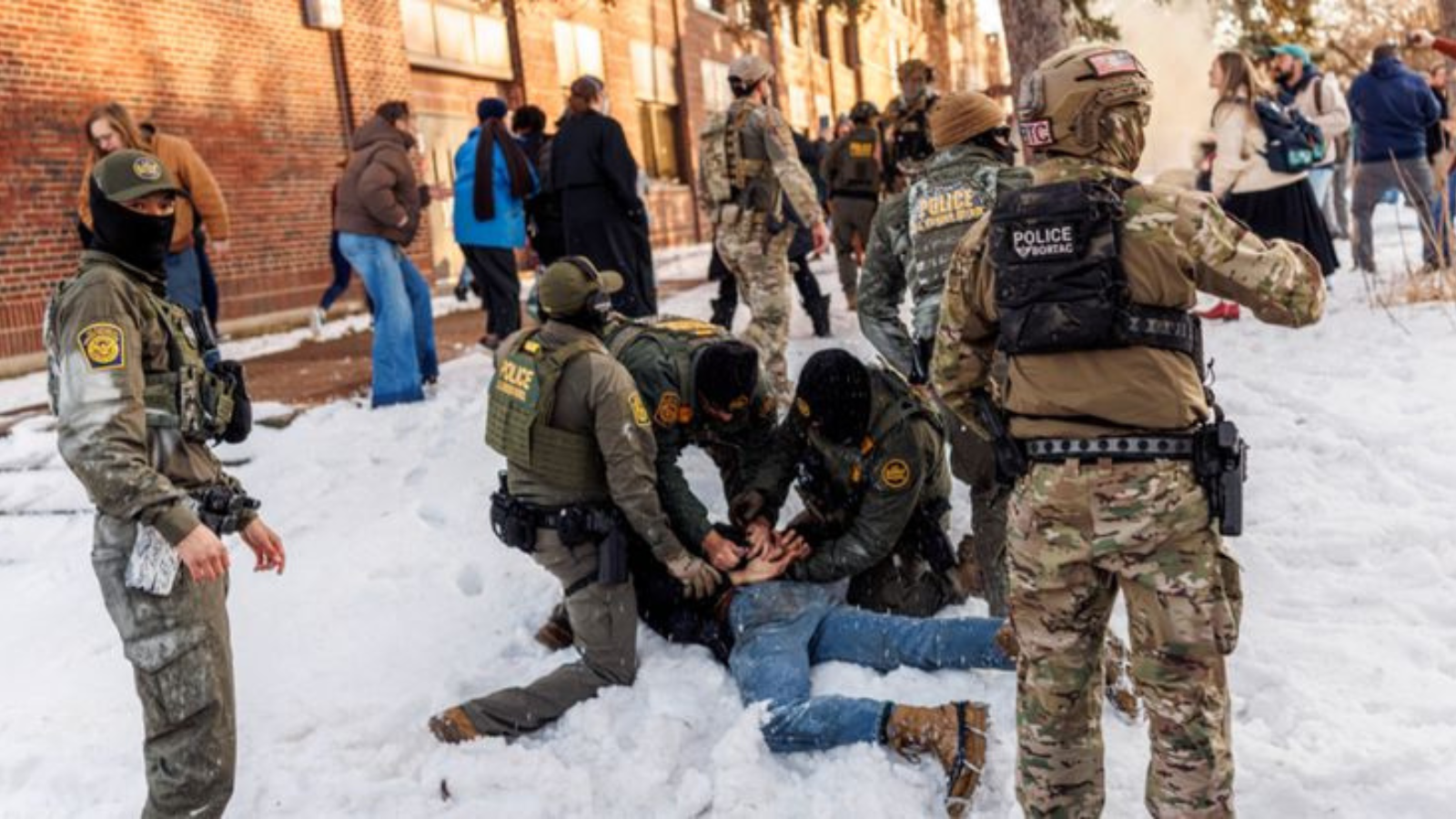
The knock came just before sunrise, the kind that makes a quiet apartment feel suddenly transparent. Neighbors in a modest Texas complex watched from behind curtains as plain-clothes officers in tactical vests moved down the walkway, calling out names they had only seen on mailboxes. For the families inside, the visit was not a surprise so much as the long-dreaded moment when the abstraction of immigration enforcement became painfully real.
In recent years, U.S. Immigration and Customs Enforcement has transformed from a largely bureaucratic agency into a flashpoint in the national conversation about borders, security, and rights. Its operations now stretch far beyond the physical border, reaching into workplaces, schools, family homes, and even online spaces where dissent and documentation collide. The question that lingers over each new raid, lawsuit, and investigative report is no longer simply what ICE can do, but whether anyone is truly keeping pace with what it already does.
That debate increasingly plays out in public, as journalists, advocates, former detainees, and even ex-officials attempt to map how an agency built to manage immigration violations came to sit at the heart of a sprawling enforcement and surveillance apparatus. Their stories, often first told in long-form audio and reported features, trace the subtle ways extraordinary powers can become routine.
The rise of an agency and the vacuum around it
ICE was created in the wake of the September 11 attacks, part of a wholesale restructuring of U.S. homeland security. In theory, its mandate was clear: enforce civil immigration law, focusing on people deemed threats or recent border crossers. In practice, Congress never followed through with comprehensive immigration reform, leaving crucial questions about priorities, limits, and oversight unresolved.
That legislative paralysis opened space for successive administrations to define enforcement through executive action. Over the past two decades, each shift in the White House has brought a different emphasis, from interior enforcement crackdowns to temporary protections, from narrowed priorities to expansive dragnet operations. Under President Donald Trump’s current second term, the pendulum has swung sharply toward mass detention and deportation, with an explicit promise to prioritize virtually all of the estimated 14 million undocumented immigrants for removal.
The result has been rapid growth in ICE’s reach and budget. Detention capacity has surged, with roughly 60,000 people held in ICE facilities as of late 2025, a 50 percent jump in less than a year. Most of them have no criminal convictions. Former officials and legal analysts describe an agency whose operational footprint has expanded much faster than the guardrails designed to contain it. “ICE expansion has outpaced accountability,” one recent legal analysis concluded, pointing to practices such as warrantless home raids and traffic stops that test, and sometimes exceed, the limits of federal authority.
Detention from the inside
If the numbers explain the scale, the stories from detention centers reveal the cost. Inside concrete cells, former detainees describe conditions that resemble criminal incarceration, despite immigration detention being a civil process. Many speak of overcrowded rooms, inadequate food, frigid temperatures, and medical care that lags dangerously behind urgent needs.
In one California facility, plaintiffs in a recent lawsuit described sewage bubbling up from drains, insects crawling on walls, and people with disabilities left without basic aids like wheelchairs or interpreters. They reported being confined in spaces “the size of a parking spot,” held for hours with limited access to clothing, clean water, or legal counsel. Those who complained, the lawsuit alleges, faced threats of violence or solitary confinement, a punishment that can quickly erode mental health.
Health researchers warn that the consequences extend far beyond release. Studies of immigration detention link prolonged confinement to an accumulation of trauma: sleep deprivation from constant lighting, chronic anxiety over possible deportation, and the disorienting effects of isolation from family and community. Outbreaks of respiratory illness, inadequate management of chronic conditions, and preventable in-custody deaths have all been documented. The system, they argue, has become a public health issue as much as a legal one.
The numbers are stark. In 2025, 33 people died in ICE detention, the highest toll in more than two decades, with additional deaths already recorded the following year. Many of these fatalities, watchdogs note, were associated with failures to follow ICE’s own medical standards. Children and pregnant people have reported particularly fragile conditions, from limited access to pediatric care to extended stays in facilities never designed for families.
A new frontier: surveillance beyond the walls
Even for those who never see the inside of a detention center, ICE’s presence can be felt in quieter, more pervasive ways. Investigations by journalists and civil liberties groups have revealed a complex digital ecosystem powering modern enforcement. License plate databases, facial recognition systems, cell phone location tools, and vast troves of consumer data now feed into software that can track and map the lives of noncitizens and citizens alike in near real time.
Some of this infrastructure predates the current administration, built through contracts with technology firms that specialize in data integration. One ICE agent, testifying in court about a Palantir-built app used in the field, likened it to a familiar, everyday product: it “looks like Google Maps.” The interface allows agents to visualize addresses, relationships, and movement patterns at a glance, turning public records and commercial data into a kind of enforcement dashboard.
The legal boundaries of that system are far from settled. In several cases, ICE has used administrative subpoenas, which do not require a judge’s approval, to demand information about anonymous social media accounts that criticize the agency. Civil liberties advocates warn that such tactics blur the line between immigration enforcement and the monitoring of political speech, raising alarms about potential chilling effects on protest and documentation. For activists who film raids or provide community support, the fear is no longer only arrest, but being tracked, flagged, and cataloged by a system they cannot see.
Where accountability goes from here
The question of whether ICE is “out of control” ultimately hinges less on any single raid or scandal and more on how a democracy chooses to regulate power that operates largely out of public view. Oversight exists, but it is fragmented: internal inspections, occasional congressional hearings, court rulings that come years after a policy takes effect. To date, these mechanisms have struggled to keep pace with an agency that can rapidly adapt tactics, deploy new technologies, and recalibrate priorities with each change of administration.
Reform proposals range from targeted fixes to sweeping redesigns. Some advocates call for stricter statutory limits on surveillance and detention, clear bans on practices such as prolonged solitary confinement for civil detainees, and stronger health and safety standards with teeth. Others argue for shifting responsibilities to different agencies or even dismantling ICE altogether, folding its essential functions into institutions with narrower mandates and stronger checks.
What is clear is that the stakes are no longer confined to immigration policy. An agency that can quietly track phones, mine consumer data, and hold tens of thousands of people in conditions that have prompted repeated human rights warnings poses broader questions about civil liberties and the balance of power between the government and the governed. Whether we answer those questions through legislation, litigation, or political pressure will define not just the future of ICE, but the contours of state power in an increasingly surveilled society.