

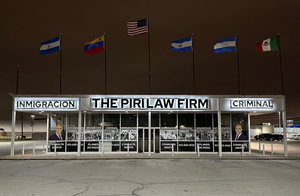
Legal marketing tends to sell expertise: credentials, case results, courtroom record. Michael Piri, founder of The Piri Law Firm in Dallas-Fort Worth, does not dispute that any of that matters. He just does not think it is what actually keeps a client from walking away from a case that has gotten slow, confusing, or discouraging.
A Blunter Explanation Than Most Firms Offer
“Lawyers like to think clients stay because of our legal theories,” Piri says. “A lot of the time, they stay because someone answered the phone on a bad day.”
That is a modest claim for a founder to make about his own firm, and it is also a fairly precise description of where trust actually breaks down in immigration and personal injury work. Cases in both practice areas can run for months or years. Somewhere in that stretch, almost every client hits a period where nothing dramatic is happening and the silence itself becomes frightening.
Where Long Cases Actually Test a Firm
The test of a law firm’s reliability rarely happens at the first meeting, when everyone is on their best behavior and the client is hopeful. It happens later, when an insurer delays a response, when a government agency takes longer than expected to process a filing, or when a hearing date gets pushed back without explanation. That stretch of a case is where clients decide, often without saying so directly, whether they still trust the people representing them.
Piri’s stated approach is to treat that period as seriously as the moments of visible progress. Calls get returned. Deadlines get tracked. A client should not have to call three times to find out whether a document was filed.
Why That Standard Is Harder to Meet Than It Sounds
Answering the phone consistently, across a caseload that has grown into the thousands, is an operational problem before it is a philosophical one. It requires internal systems that keep every file visible to the staff answering that day’s calls, not just to the attorney who originally took the case. Firms that rely on informal tracking tend to see this standard erode exactly as the caseload grows past what any one person can hold in memory.
The Piri Law Firm’s answer has been to build its intake and case-tracking systems around the assumption that any staff member should be able to give a client a real answer about where their case stands, not a vague reassurance that someone will call back.
What This Standard Protects
For clients navigating an immigration matter or recovering from a serious injury, the stakes of a case are rarely abstract. A missed deadline or an unreturned call does not just delay paperwork; it reads, to someone already under strain, as evidence that their case and their situation do not matter to the people handling it.
Piri’s framing puts the emphasis in an unusual place for a law firm: not on the theory behind a filing, but on whether someone picked up the phone when it mattered. It is a low bar to state out loud and, according to his own account of the practice, a harder one to actually hold across a firm handling thousands of active files.