
When Sarwa launched in the UAE, skeptics were quick to dismiss it. Retail investing, they argued, was a Western concept — something that didn’t map onto the financial culture of the Gulf. Seven years later, the Abu Dhabi-based wealth management platform has a pointed rebuttal: $1 billion in client investments and counting.
Sarwa recently crossed that milestone, making it the first fintech in the Gulf Cooperation Council (GCC) to do so — a quiet but significant moment in a region where personal finance has long been dominated by traditional banks and high-net-worth advisory services. The platform now serves over 200,000 clients across the GCC and Southeast Asia, offering everything from automated investing and self-directed stock trading to cryptocurrency access and high-yield savings accounts.
“Back when we started, people said retail investing wouldn’t work in the MENA region, that the mentality was different in the West,” said Mark Chahwan, co-founder and Group CEO. “Hitting and then crossing $1 billion proves the opposite. Retail investors were underserved, and this community has become remarkably strong.”
Closing The Gap
The gap Chahwan refers to is both financial and cultural. For years, accessible investing tools in the Middle East were either prohibitively expensive, overly complex, or simply nonexistent for the average earner. Sarwa was designed to change that — built around a low-cost model, an intuitive interface, and a deliberate emphasis on financial literacy. The platform’s educational resources aren’t a side feature; they’re central to its acquisition strategy, drawing in first-time investors who might otherwise never have entered the market.
That approach has paid off. Sarwa has maintained an average year-over-year growth rate of 100% for three consecutive years, a pace that co-founder and CTO Jad Sayegh calls a function of compounding momentum rather than any single breakthrough.
“This achievement belongs to our clients,” Sayegh said. “It’s their money, their portfolios, their growth. The speed at which we’ve reached this point shows how quickly momentum builds once people start investing.”
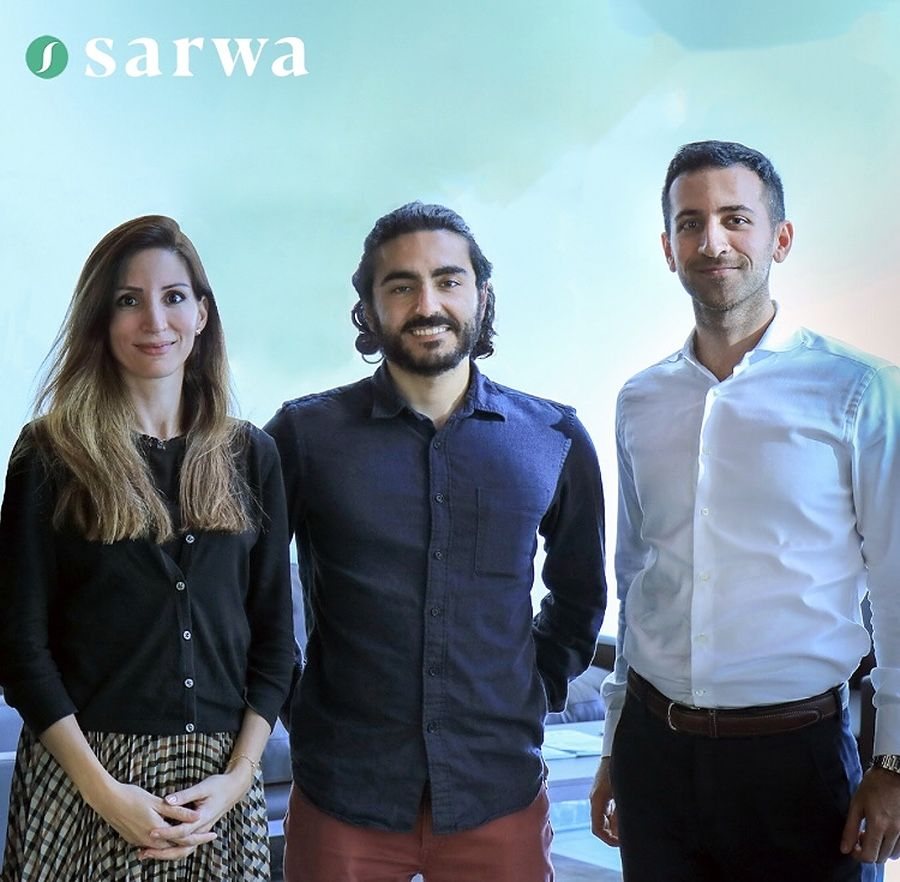
Sayegh built the platform’s technical infrastructure from the ground up, and the milestone carries personal weight for both founders — who are both 33 — alongside co-founder Nadine Mezher, the platform’s previous CMO. Together, the trio raised $25 million across funding rounds, with Mubadala Investment Company, Abu Dhabi’s sovereign wealth fund, leading their Series B in 2021.
Trading As A Gateway
A key differentiator in Sarwa’s growth story is its flagship product, Sarwa Trade, which offers low-cost access to thousands of stocks, ETFs, and crypto assets. The platform became the first in the MENA region to offer options trading — a move that signals its ambitions to serve not just beginners, but sophisticated retail traders who previously had to look elsewhere.
It’s a dual-market strategy: meet first-time investors with guided entry points and educational scaffolding, while simultaneously building tools complex enough to retain them as they grow. The breadth of that offering under one app is what sets Sarwa apart in an increasingly crowded regional fintech landscape.
The company graduated from the Dubai Financial Services Authority’s regulatory sandbox — a proving ground that has historically been selective — and has earned recognition from Forbes Middle East, including a cover feature in 2023 and a No. 12 ranking on its Top 20 Fintechs list in 2025.
What $1 Billion Actually Means
It’s worth noting the fine print: the $1 billion figure reflects cumulative client deposits over Sarwa’s lifetime rather than assets under management at a single point in time. That distinction matters, but it doesn’t diminish what the number represents — a sustained, growing trust from a clientele that was once told they weren’t ready for this.
For a region that is home to some of the world’s fastest-growing populations of young, digitally native professionals, Sarwa’s trajectory suggests the market was never the problem. The access was.“Retail investors were underserved,” Chahwan said. And for Sarwa, that underservice turned out to be the opportunity of a generation.