
There is a particular blindness built into the way cities manage their roads. The crash reports arrive in batches. The count data accumulates in databases nobody reads until a councillor asks a question. The near-miss at the school crossing at 8:15 on a Tuesday morning — the pedestrian who stepped off the kerb, the van that braked hard, the incident that did not quite happen — goes unrecorded. By the time a pattern shows up in the numbers, it has usually shown up first in an ambulance report.
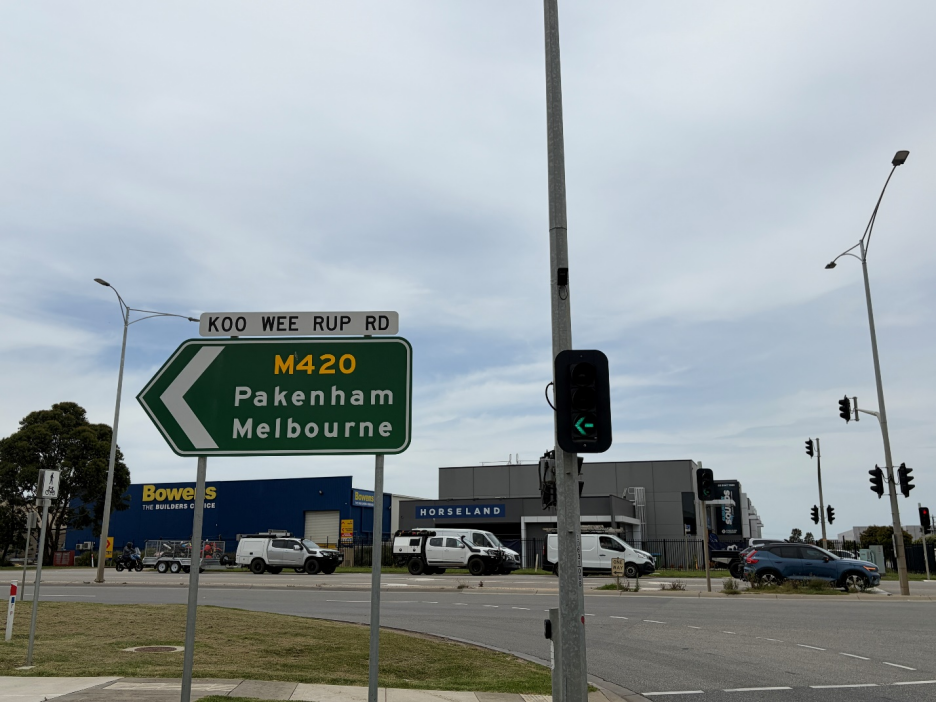
Most intersections in the Asia-Pacific region still run on technology that was never designed to close that gap. Road loops under the asphalt confirm a vehicle crossed a point. Radar units on poles measure speed. Thermal cameras detect presence at night. None of these systems talk to each other in a way that produces a coherent picture of risk. None of them can act on what they see.
XVision AI, an Australian company founded a year ago, has built something that can. Its EagleEye device — a stereo-vision unit that mounts at an intersection and processes everything onboard — collapses what were previously five or six separate legacy components into a single platform. Two lenses produce three-dimensional depth data comparable to LiDAR at a fraction of the price. Onboard AI classifies every road user in the frame, tracks how they move relative to one another, and flags the patterns that matter: the pedestrian who did not quite make the crossing, the gap in a queue that turns into a merge conflict, the chronic near-miss at a left-turn pocket that nobody has documented yet.
Since launching in late 2024, XVision has deployed 180 EagleEye units across the region. The company has identified more than 100,000 intersections across Asia-Pacific that remain on legacy systems, and has set a target of operating in at least 1,000 of them by 2027.
What makes XVision’s positioning unusual in a sector not short of vendors making ambitious claims is the attention it pays to the people who actually install things. Systems integrators — the contractors who build, commission, and maintain road infrastructure — have spent careers juggling hardware from half a dozen suppliers, none of which were designed to work together. EagleEye offers a single device handling detection, analytics, and data output, with new capabilities added through software rather than hardware. For integrators, the business case involves simpler deployments and recurring revenue from software features cities buy as their needs evolve.
For the city official sitting across the table from that integrator, EagleEye offers something different: the kind of evidence that turns a budget conversation into a solvable problem. Near-miss data. Pedestrian conflict mapping. Congestion patterns tied to specific signal phases. The ability to show a council chamber not that an intersection feels dangerous, but that it measurably is.
“For the first time, councils and integrators can move beyond guesswork,” said Simon Maselli of XVision AI. “XVision AI gives them the evidence to answer critical questions — where risk is building, why congestion persists, and where investment will have the greatest impact — before those issues turn into costly or dangerous outcomes.”
Cities have been promised intelligence before. Smart-city technology has accumulated a long and expensive record of pilot projects that never scaled, dashboards nobody checked, and infrastructure that was obsolete before the warranty expired. XVision AI’s argument is that those failures were architectural, not conceptual — that the problem was never the aspiration but the fragmentation. A city equipped with EagleEye at a thousand intersections gets something a city equipped with a patchwork of sensors speaking different data languages does not: a network. The picture gets clearer with each new site.
Whether 1,000 intersections by 2027 proves to be the first chapter or the whole story remains, for now, an open question. At 180 units and counting, XVision AI has at least demonstrated that cities are willing to ask it.