
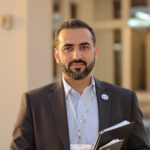
Most people who earn a law doctorate go on to argue cases in courtrooms. Dr. jur. Can Ansay went somewhere else entirely. He built a platform that has handled over 3 million medical treatments, serves more than 1 million patients, and operates across 4 countries — all without a single waiting room. That pivot from Hamburg attorney to serial tech entrepreneur is the engine behind DrAnsay, one of Germany’s most recognized telehealth platforms. It is also a story about what happens when someone trained to read fine print decides the healthcare system has too much of it.
From Law Office To Tech Launchpad
Ansay spent his early career practicing law in Hamburg, where he earned his doctorate from the University of Hamburg, focusing on M&A in German and Turkish law. By 2013, though, the courtroom had given way to code. He built an AI-powered medical diagnosis application, EBMApp.com, well before artificial intelligence became a buzzword in Silicon Valley boardrooms.
The following years saw the development of a foldable virtual reality headset for smartphones, patented in 2015, and a corresponding Android app. Each project pointed in the same direction: technology that solves a real problem for a large number of people, fast and without friction. That instinct would reach full expression with DrAnsay. “I only love services that enable great benefits for many people so simply that even experts are surprised,” Ansay has said. “For many, therefore, I seem like a ghostrider on the highway until they realize that they are the ghostriders.”
DrAnsay: A Platform That Moves At The Speed Of Need
Ansay founded the company in 2018, initially under the name au-schein.de, targeting one of Germany’s most overlooked inefficiencies: the mandatory in-person doctor visit to obtain a sick note. Workers who were mildly ill still had to dress, travel, wait, and expose others in a waiting room just to receive a piece of paper. Ansay saw a clear gap and moved on it. The process on DrAnsay is stripped to its essentials. A patient completes an online medical questionnaire, a licensed doctor reviews the submission, and a prescription or sick note arrives digitally within minutes.
Medication is followed by a post within two to four days. No appointment. No travel. No waiting room, small talk with someone who has a worse cough than you do. That model resonated. By the time the COVID-19 pandemic forced the world to reconsider in-person everything, DrAnsay had already shown what remote healthcare could look like. The platform now covers medical cannabis prescriptions, repeat prescriptions, weight loss treatments, men’s and women’s health services, and general medicine — all under one digital roof. Its AI chatbot, DrAnsAI, fields health questions around the clock, adding another layer of accessibility to a platform already built around speed.
The numbers back the ambition. DrAnsay claims to have delivered over three million treatments, served more than one million patients, earned a 4.5-star trust rating, and built a growing international footprint spanning Germany, France, the United States, and Brazil. When Ansay launched AtestadoMedico24.com in Brazil in late 2023, he framed it with characteristic directness. “Employees in Brazil are now happy to get their sick notes for harmless short-term illnesses easily within five minutes instead of wasting time on unnecessary visits to a doctor’s practice,” he said.
The Bigger Play: AI, Access, And What Comes Next
DrAnsay’s rise tracks closely with Germany’s broader push to overhaul its healthcare system through digital tools. The German telehealth market stood at $2.79 billion in 2024 and is projected to reach $4.4 billion by 2030, growing at a compound annual rate of 9.54%. Ansay did not wait for that wave to build — he was building infrastructure while the tide was still coming in.
His ambitions stretch well past digital prescriptions. Through yoursearch.ai and yourchat.ai, he has set his sights on challenging Big Tech’s dominance in search, arguing that Google’s 25-year monopoly has suppressed genuine progress. His stated model — open-source software, giving 60% of profits and voting rights back to users and website creators — reads less like a standard startup pitch and more like a manifesto.
What ties it all together is a pattern visible from the AI diagnosis app of 2013 through to the cannabis marketplace and the AI search engine: Ansay targets systems that are slow, gatekept, and ripe for acceleration, then builds the shortest possible path between a person and what they need. A lawyer by training, a technologist by choice, and an entrepreneur by disposition — his career suggests that the most disruptive thing he ever did was leave the law office and never look back.