
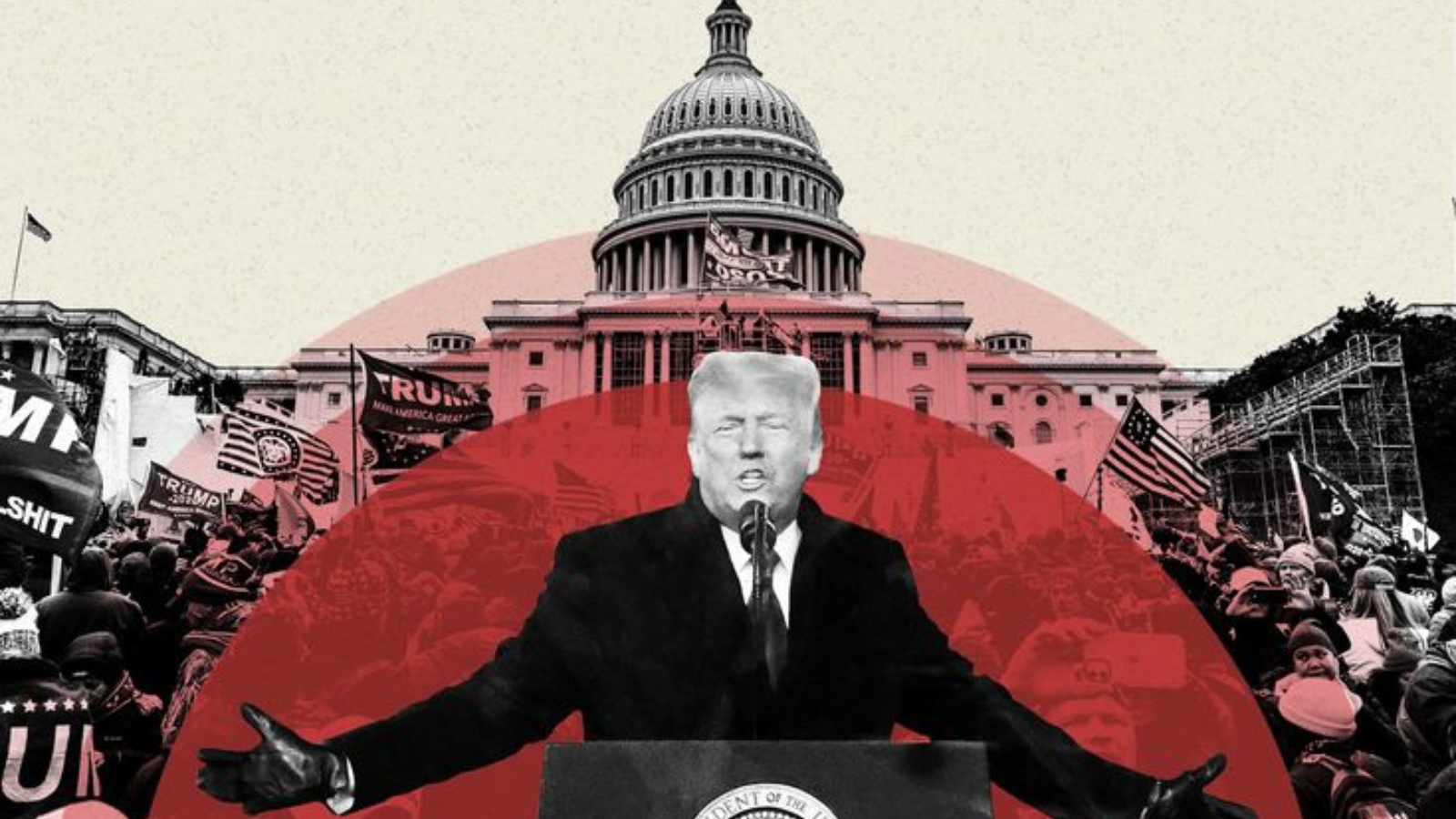
When Donald Trump returned to the White House in 2025, his rhetoric about borders and territory sharpened into something bolder than the wall-building slogans that defined his first term. He floated ideas about absorbing Canada, rebranding the Gulf of Mexico as the “Gulf of America,” and even revisiting the notion of acquiring Greenland, echoing a proposal that once drew global bewilderment. To his supporters, these gestures signaled a swaggering restoration of American power; to many of his critics, they looked like the outlines of a twenty‑first‑century empire, sketched in sharpie on a TV map.
Yet there is a gap between ambition and actuality, between speeches designed for domestic consumption and the hard constraints of international law and geopolitics. Trump’s vision arrives at a moment when formal conquest is widely viewed as illegitimate, even as great powers still jockey for influence, resources, and military advantage. The question is whether his territorial talk marks a serious break with the postwar order or a performance crafted for an audience of one: the man in the mirror.
The language of empire, updated for cable
Trump’s territorial fantasies are rarely buried in policy papers; they are delivered live on television, in social posts and rally riffs built for instant replay. In his first months back in office, he again mused about seizing control of the Panama Canal and securing access to Greenland, framing both as overdue corrections to history and essential to American security. At times he has toyed with the idea of folding Canada into the union, casting a sovereign neighbor as a wayward province that simply has not yet realized it belongs under Washington’s flag.
This is not the language of cautious diplomacy. It harkens back to the era when the Monroe Doctrine gave Washington a self‑appointed policing role over Latin America, updated with the branding instincts of a reality‑show producer. Analysts point to a cluster of behaviors that resemble a softer, more transactional imperialism: territorial expansionist rhetoric, open discussion of military options, economic pressure through tariffs, and aggressive bids for control of strategic resources. In this telling, Trump’s “America First” is less an isolationist retreat than an attempt to refit U.S. primacy with fewer apologies and more spectacle.
At the same time, the White House couches these moves in the language of deals rather than conquest. Talk of “reciprocal tariffs” and “leverage” casts coercion as negotiation, even when the underlying message to smaller states is plain: align with Washington’s interests or face economic punishment. It is imperial vocabulary, filtered through the idiom of business, where every treaty is a contract and every ally a client to be managed.
Illusions, constraints, and the global audience
For all the talk of maps and mergers, the legal and political barriers to actual annexation remain formidable. International law is explicit: states cannot seize another country’s territory without its consent, a principle that underpins everything from European borders to fragile ceasefires on other continents. NATO partners bristle at the notion that Greenland, a self‑governing territory of Denmark, could be treated as a line item in a U.S. real‑estate portfolio, especially at a moment when alliance unity is tested by other crises. And countries like Canada, often invoked as if they were subordinate, remain capable of pushing back diplomatically and economically when Washington overreaches.
Abroad, Trump’s rhetoric has already become a reference point for other powers with their own territorial agendas. Commentators warn that when Washington openly toys with land grabs, it weakens its ability to condemn similar moves by rivals, from maritime encroachments to annexations justified by ethnic or historical claims. In a world where borders are contested from Eastern Europe to the South China Sea, America’s flirtation with imperial language hands ready-made talking points to those who insist that might still makes right.
Yet there is also a sense, especially among seasoned diplomats, that much of this performance is aimed less at foreign capitals than at voters at home. Trump’s vision of a re‑muscular United States plays well in towns that feel sidelined by globalization and nostalgia, where bold strokes on the map can stand in for more complicated solutions on trade, jobs, and inequality. In that light, the most important audience for his territorial bravado may not be in Ottawa or Copenhagen, but in swing counties watching the highlights on cable news.
The emperor’s projection
If this is imperialism, it is as much about projection as possession. Trump’s claims on far‑flung lands, his talk of renaming seas and redrawing borders, can resemble a made‑for‑television version of power, where the key objective is to look dominant rather than to govern new populations or integrate complex territories. The optics matter: photographs in front of maps, soundbites about toughness, a narrative of restored greatness that can be repeated again and again.
That spectacle invites its own form of scrutiny. Critics argue that insisting the United States can simply bend the world to its will risks exposing the limits of American influence, especially when those threats are not backed by coherent policy or allied support. When proposals to buy or annex sovereign lands predictably stall, the gap between the promise and the outcome grows harder to ignore, and the performance begins to look less like strategy and more like theater.
Still, illusions can have consequences. Even if no new stars are added to the U.S. flag, the repetition of expansionist ideas can normalize them at the edges of mainstream debate and unsettle partners who once took American restraint for granted. Whether Trump’s territorial ambitions ultimately reshape the global order or remain a story he tells about himself, they force the world to reckon with a superpower that increasingly treats the map as a stage, and sovereignty as a prop.