

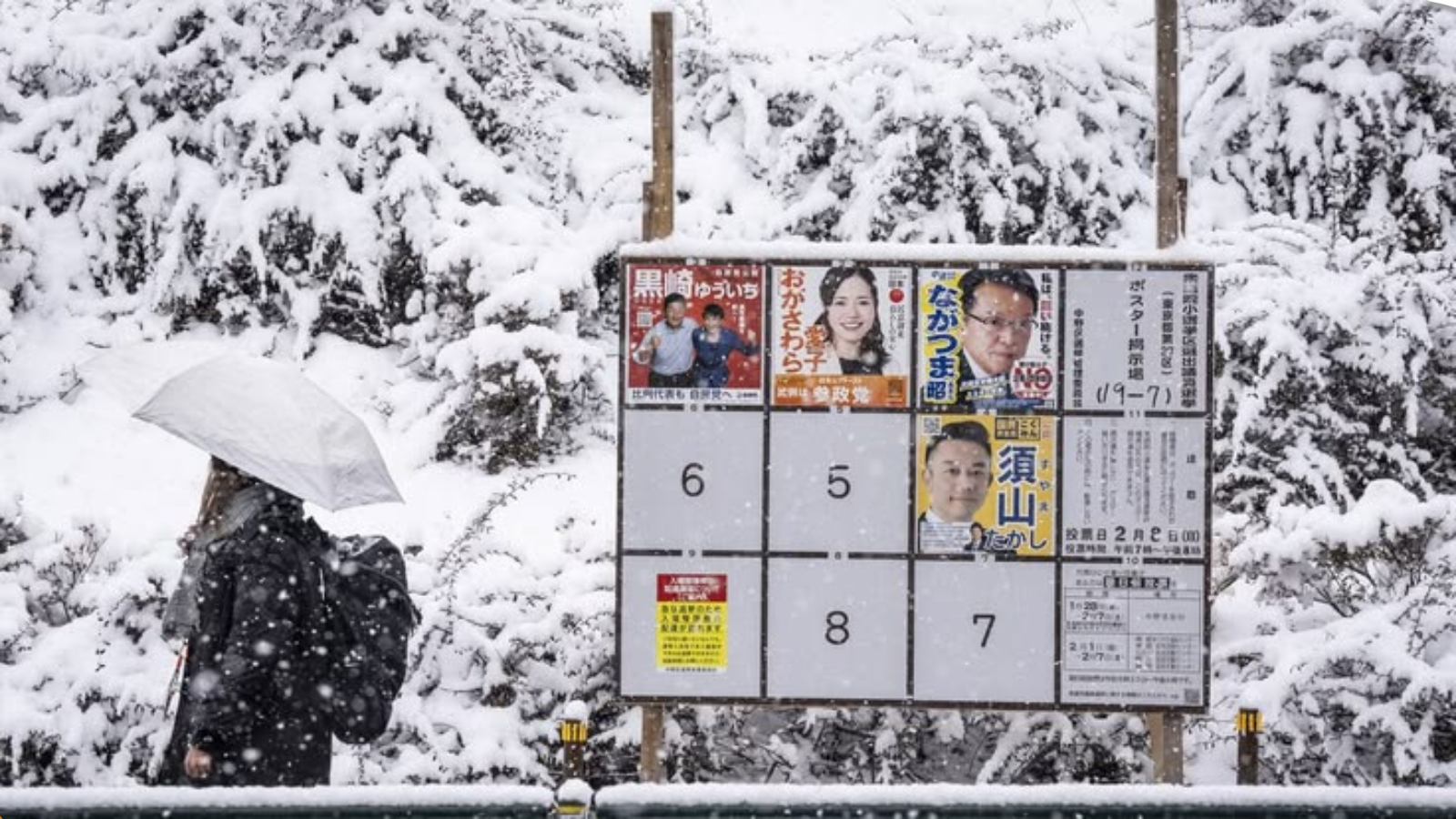
Japan’s sudden general election has unfolded under an unusually harsh winter, transforming what is typically a well-orchestrated democratic exercise into a test of endurance. Across northern prefectures and urban centers alike, snow-laden streets and biting temperatures have slowed campaign momentum, reshaping how candidates connect with voters in real time. Political rallies that would normally draw energetic crowds now contend with icy sidewalks and limited turnout, forcing campaigns to rethink their strategies.
Candidates have adapted with urgency, shifting from traditional street speeches to more localized, indoor engagements. Yet even these adjustments come with constraints, as transportation delays and weather disruptions continue to ripple across the country. In rural districts, where accessibility is already a challenge, the cold has amplified logistical hurdles, potentially silencing segments of the electorate who may find it difficult to travel to polling stations.
Voter Turnout in Question
The most immediate concern for political observers is how the severe weather may influence voter participation. Historically, Japan boasts relatively stable turnout rates, but extreme conditions introduce a layer of unpredictability. Elderly voters, who represent a significant portion of the electorate, are particularly vulnerable to the risks posed by icy conditions, raising concerns about reduced engagement in key districts.
Younger voters, while generally more mobile, may also be discouraged by the inconvenience of navigating through snow and freezing temperatures. This dynamic could subtly skew the demographic composition of those who ultimately cast their ballots. Analysts suggest that even a marginal dip in turnout could have outsized effects in closely contested constituencies, where a few thousand votes may determine the outcome.
Strategic Shifts Behind the Scenes
Political parties have responded with a mix of pragmatism and innovation. Digital campaigning has taken on renewed importance, with candidates leveraging social media platforms and virtual town halls to maintain visibility. While Japan has traditionally favored in-person political engagement, the current conditions have accelerated a gradual shift toward more hybrid campaign models.
At the same time, party organizers are focusing on mobilization efforts, ensuring that core supporters are not deterred by the weather. Volunteer networks have been deployed to assist voters, particularly in areas heavily impacted by snowfall. These efforts reflect a broader recognition that in an election shaped by external forces, operational efficiency may prove just as critical as policy messaging.
Behind closed doors, strategists are recalibrating expectations. Polling data collected prior to the cold snap may no longer accurately reflect voter behavior under these conditions. As a result, campaigns are relying more heavily on real-time feedback and localized intelligence to guide their final push.
The Broader Political Implications
Beyond the immediate electoral outcome, the intersection of climate conditions and democratic participation raises deeper questions about resilience and adaptability. Japan’s experience underscores how environmental factors can influence political processes in ways that are often overlooked. While extreme weather events are not new, their increasing frequency adds a layer of complexity to election planning and execution.
For policymakers, this moment may prompt a reassessment of how elections are conducted, particularly in regions prone to severe seasonal conditions. Discussions around expanded early voting, improved infrastructure, and contingency planning are likely to gain traction in the aftermath of this election.
As voters make their way to the polls amid swirling snow and freezing air, the election becomes more than a contest of policies and personalities. It is also a reflection of how a modern democracy navigates unforeseen challenges. In this frozen landscape, every vote carries not just political weight, but a testament to civic commitment under pressure.