

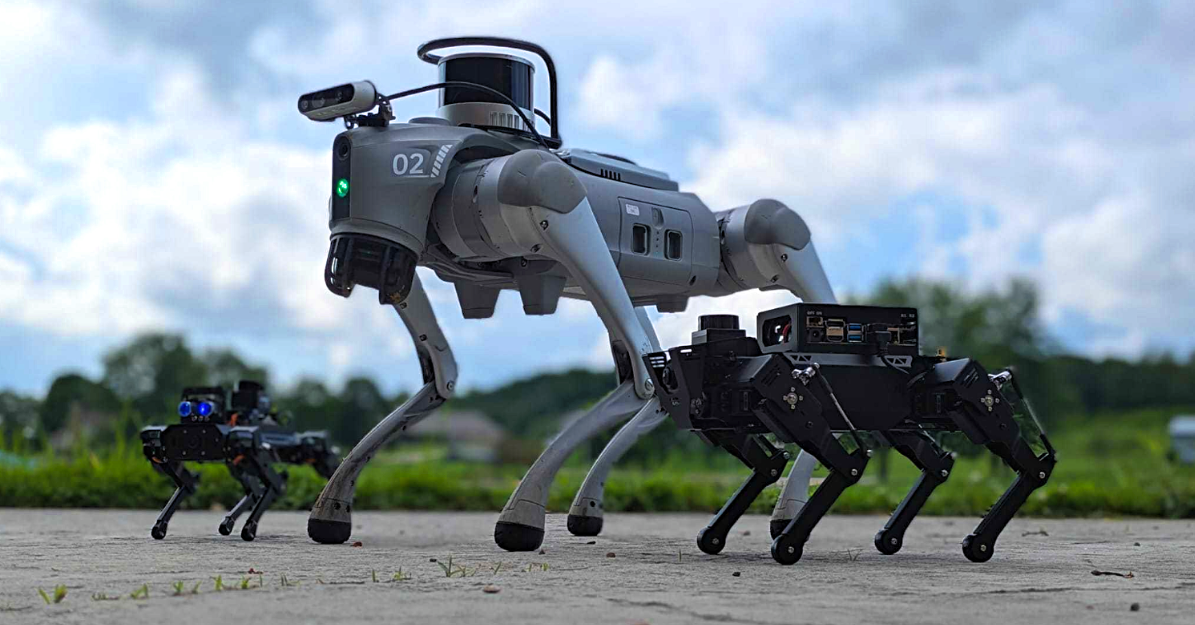
In Skylark Labs’ Palo Alto headquarters, three autonomous artificial intelligence (AI) systems engage in something remarkable: direct knowledge transfer with no cloud connection or human guidance. Having mastered complex pattern recognition, one system actively teaches another, which acquires the capability without traditional training data or programming.
This machine-to-machine knowledge transfer highlights Skylark Labs’ breakthrough Collaborative Learning Framework, a technology that fundamentally reimagines how AI systems interact and evolve together.
“Individual intelligence has limits, even in humans,” explains Dr. Amarjot Singh, founder and CEO of Skylark Labs. “Our greatest achievements come through collaboration. Why should artificial intelligence be different?”
The Mirror Neuron Inspiration
Traditional AI systems learn in isolation, even when deployed across multiple locations, each instance operates separately, unable to share insights or newly acquired capabilities with its counterparts. This creates significant inefficiencies in security applications, where confining threat knowledge to one system leaves others vulnerable.
Skylark Labs’ solution draws inspiration from mirror neurons—specialized brain cells that fire when performing an action and observing others perform it. This neural mechanism forms the biological foundation for observational learning.
“Mirror neurons allow humans to transfer knowledge without explicit instruction,” explains Dr. Andrea Soltoggio, an AI researcher advising Skylark Labs. “A child watching someone tie a shoelace internalizes that sequence without step-by-step guidance. It’s one of nature’s most efficient knowledge transfer mechanisms.”
Skylark Labs’ framework replicates this biological principle, enabling AI systems to directly share learned capabilities across a network. When one system masters a new pattern, whether identifying a security threat or recognizing unusual behavior, it efficiently transmits that knowledge to others without human intervention.
How The Framework Functions
Skylark Labs’ collaborative learning framework operates through sophisticated knowledge distillation built on brain-inspired architecture with three components: knowledge extraction, knowledge transmission, and knowledge integration.
Knowledge extraction refers to systems that create abstracted representations of learned patterns, similar to how humans explain concepts. Meanwhile, systems compress knowledge transmissions into abstractions in efficient formats, requiring minimal bandwidth.
Lastly, knowledge integration occurs when receiving systems incorporate new knowledge without disrupting existing capabilities, solving the “catastrophic forgetting” problem plagues traditional AI.
“We’re not sharing raw data or doing complete re-training,” Dr. Singh explains. “We’re sharing model parameters with some internal .”
This technique substantially reduces bandwidth requirements while enhancing security compared to traditional methods that require extensive datasets or full model updates.
Real-World Impact
Skylark Labs’ Collaborative Learning Framework is already in field deployment. At high-risk borders, Scout MK II AI Towers demonstrate rapid propagation of threat identification capabilities. When one tower detects a new smuggling method, that insight is instantly transferred to others.
“We’ve documented an 83% reduction in time required for system-wide adaptation to new threats,” says George Brown, a security officer user of Scout Towers. “What previously took weeks now happens in minutes, without human intervention.”
In defense, Skylark’s ARIES platform shows similar performance. During live exercises, one unit identifying a novel drone maneuver quickly updated all others, even in cloud-denied environments.
“Within minutes, every system acquired the new capability—without cloud connectivity or engineer intervention,” explains Colonel (Ret.) Bradley Boyd, former director of AI-enabled warfighting capability development at the US Department of Defense’s Joint Artificial Intelligence Center
The ability to learn, adapt, and share intelligence in real time, without cloud dependency, saves both lives and logistics, especially in environments where connectivity is limited or intermittent.
Cross-Modal Knowledge Transfer
What distinguishes Skylark Labs’ brain-inspired collaborative learning framework is its efficient knowledge representation, which is directly inspired by how mirror neurons encode actions. This enables sharing that transcends specific sensory modalities.
A system using visual sensors can transmit threat pattern knowledge that radar or audio systems can integrate into their unique frameworks.
In a recent security exercise, a visual monitoring system identified an unauthorized access pattern and successfully transmitted this knowledge to a radar system, which adapted to detect the same pattern through entirely different sensory data.
Operational Benefits
Traditional AI systems rely on manual retraining cycles that are labor-intensive and resource-draining. The process begins with data gathering, often involving sourcing vast amounts of new, domain-specific data. This is followed by annotation, where human experts must label and validate thousands—sometimes millions—of data points. Then comes model retraining, which requires powerful GPU infrastructure and weeks of compute time to update the model without degrading prior knowledge.
After training, quality assurance (QA) is conducted through extensive validation and fine-tuning to ensure accuracy and stability. Finally, the updated model must be redeployed across the network, often a multi-gigabyte update pushed to each device. Each stage introduces significant financial cost, human overhead, and operational delays, particularly in real-world environments where downtime and latency are critical.
Skylark’s systems bypass these entirely, reducing end-to-end adaptation costs by more than 60% and slashing update timelines from months to minutes.
This isn’t just a technical gain; it’s a financial revolution in AI operations. A conservative internal estimate suggests per-class savings between $2.1M and $191M, where a “class” refers to a newly learned object, behavior, or threat category that a model must recognize (e.g., a new type of drone, weapon, vehicle, or smuggling pattern).
Each time traditional AI must learn a new class, it triggers expensive data, retraining, and deployment cycles, all of which are entirely bypassed by Skylark’s collaborative learning approach.
“The most significant impact is operational,” notes Dr. Singh. “Threats that previously might have gone undetected for weeks can now be identified and shared across entire deployments almost instantly.”
A Window To Collective Intelligence
Skylark Labs’ research now focuses on “collaborative problem-solving,” enabling multiple AI systems to tackle complex challenges beyond any individual system’s capabilities. Early experiments show promising results in distributed surveillance, autonomous vehicle coordination, and complex pattern recognition across heterogeneous sensor networks.
“The future isn’t just about individual AI systems becoming more capable. It’s about creating networks of collaborative intelligence that address challenges no single system could tackle alone,” Dr. Singh affirms. “Just as human intelligence reached new heights through collaboration and specialization, artificial intelligence will achieve its full potential through similar principles.”
Dr. Singh’s vision for a brain-inspired collaborative learning framework offers a compelling glimpse into a future where AI transcends isolated learning, creating adaptive, collaborative systems that continuously evolve through shared experience, much like humans have throughout history.