

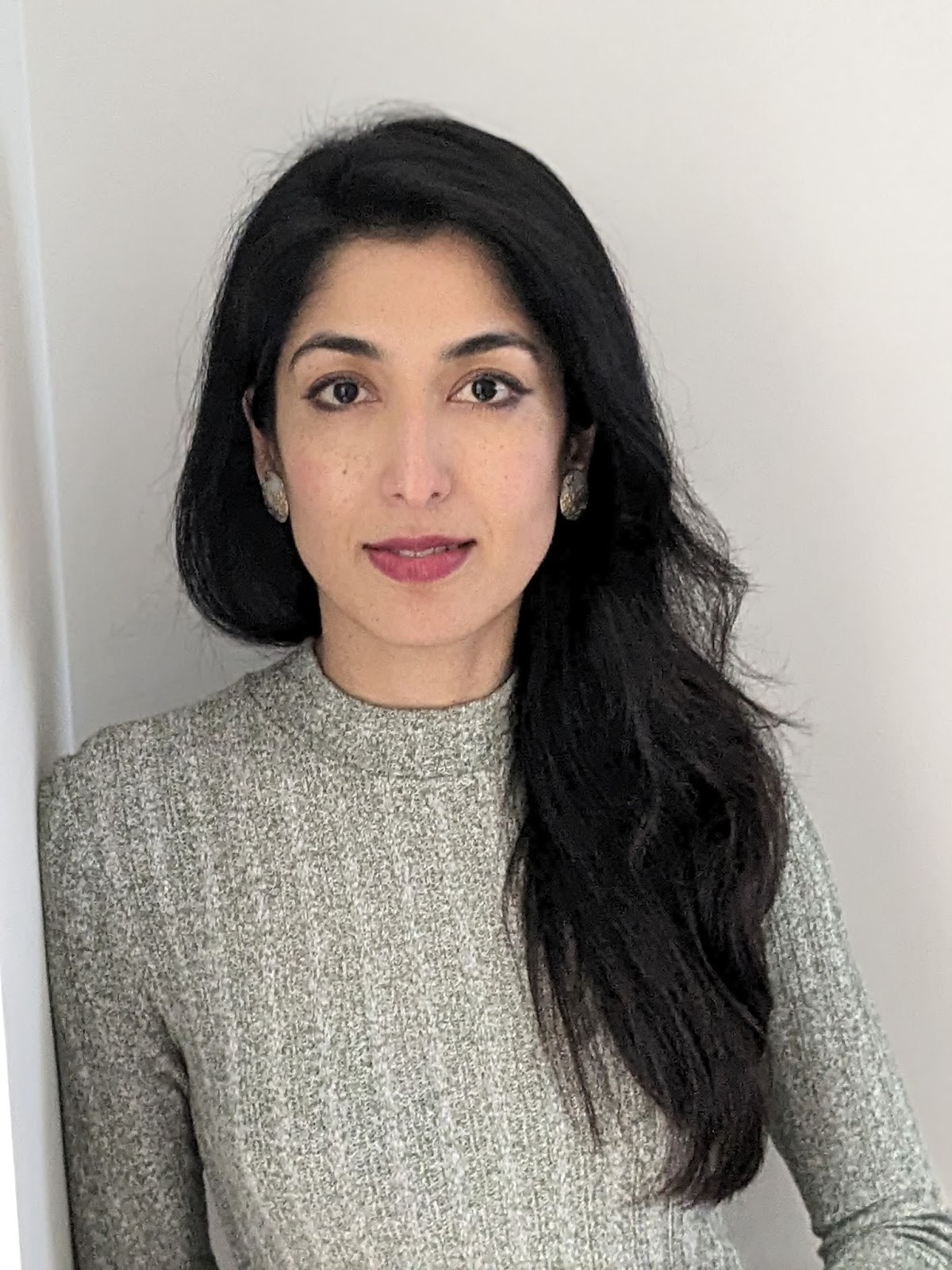
Forty percent. That is the number Professor Mishal S. Khan and her team uncovered when they sent data collectors — posing as pharmaceutical sales representatives — into the clinics of private doctors in Karachi, Pakistan. Forty percent of those doctors agreed, willingly, to accept financial incentives from a pharmaceutical company that did not exist, in exchange for prescribing medicines they had no clinical reason to favor. The company was fictional. The doctors were real. The problem, it turned out, was enormous.
Khan did not stumble onto this finding. She chased it with a method her team had to invent, because no existing tool could measure something that powerful interests had kept invisible for decades. The study, published in BMJ Global Health in January 2025, was the first of its kind worldwide. And it did something that decades of anecdotal suspicion had failed to do: it put a number on healthcare corruption that no one could argue away.
The Woman Who Was Never Supposed To Be In The Room
Long before the bribery study, Khan’s career had already been shaped by a particular kind of audacity. She grew up with an underrepresented background, navigated serious health challenges, and arrived at Cambridge University as an outsider—the first in her family to attend a world-ranked institution. She earned a double first in Natural Sciences. Then she did something that most scientists never do: she went to work for the pharmaceutical industry itself.
Five years as a pharmaceutical strategy consultant gave Khan a rare and uncomfortable education in how commercial interests move through healthcare systems. She watched the logic of profit shape decisions that, in theory, were supposed to be about patients. When she left to pursue a PhD at LSHTM on a Commonwealth scholarship, she carried that knowledge with her — and it became the engine of everything that followed. At just 24 years old, without yet holding a doctorate, she published a randomized controlled trial in The Lancet, the world’s most cited medical journal.
The study addressed something that had been overlooked for years: tuberculosis diagnoses were lower in women than in men, and the gap had nothing to do with biology. Standard sputum-collection procedures were simply harder for women to complete, and nobody had bothered to fix that. Khan’s trial showed that targeted, gender-specific instructions dramatically improved diagnostic accuracy. The evidence was undeniable. The problem, once named, could no longer be ignored.
She went on to become a full professor at LSHTM before the age of 40 — a milestone she reached while leading research across Pakistan, Cambodia, Indonesia, Bangladesh, Kenya, and beyond. She co-authored the internationally used textbook *Making Health Policy*, sits on the Lancet’s International Racial Equity Advisory Board, and holds advisory roles at Chatham House and the World Health Organization. Over two decades at LSHTM, she moved from student to faculty member to elected Council member to professor — a trajectory that is as much a statement about persistence as it is about brilliance.
When Education Fails And The System Wins
The pharmaceutical bribery study did more than reveal a startling statistic. It demolished a comfortable assumption. After the covert measurement phase, Khan’s team ran a parallel experiment: they offered a multifaceted ethics seminar to a randomly selected group of the same doctors, then went back three months later to measure whether attitudes had changed. The intervention group received the seminar.
The control group did not. When the data came back, the gap between the two groups was statistically negligible. The seminar had almost no effect. Telling doctors to behave ethically, without changing the conditions that made bribery rational, changed nothing. The implications are significant. Global healthcare systems, particularly in lower-income countries where public services are underfunded and private clinics fill the gap, have for years defaulted to educational solutions to address corruption and conflicts of interest.
Khan’s research makes clear that this response is inadequate. The problem sits upstream, in the structures that make pharmaceutical payments a normal part of a doctor’s income. Roughly 10 to 25% of global healthcare spending is lost to corrupt practices each year, according to researchers who study the issue. Educational workshops do not touch that figure. What would actually move the needle?
Khan has argued for mandatory ethics content embedded in medical licensing and relicensure requirements, binding accountability standards for pharmaceutical sales practices, and regulatory frameworks with real enforcement capacity rather than aspirational guidelines. Those are structural solutions. They require political will that the pharmaceutical industry and private healthcare sector, which together hold enormous economic and political power, tend to resist.
Challenging The Hierarchies That Decide Whose Health Matters
Khan’s work has never been confined to a single country or category of corruption. She has spent years writing and speaking about a different but related form of power — the racial and institutional hierarchies that determine whose research gets funded, whose health priorities get set, and whose voices get heard at the tables where global health decisions are made. When the Black Lives Matter movement pushed questions of structural racism into public consciousness, Khan was among the scientists who refused to let global health institutions off the hook.
She served on the team overseeing LSHTM’s Independent Review of Racism — a process that, when it concluded, found structural discrimination against non-white staff and students at one of Europe’s most respected public health schools. She published on the barriers facing ethnic minority women in senior academic positions, drawing directly on her own experience as a Pakistani woman who broke through those barriers at Cambridge and LSHTM.
Her inaugural lecture at LSHTM asked a question that cut to the core of her life’s work: “Who do global health initiatives really serve?” The answer she has spent her career building toward is not comfortable. Power, money, and institutional inertia repeatedly place profits above patients and donor interests above the health priorities of the communities they claim to serve. Khan studies the mechanisms of that displacement — and then publishes the evidence in the places where it cannot be buried.
Her goals for the years ahead are concrete: build influence with UK health policymakers, expand the covert research methodology her team created, and reach a broader public audience that includes lay readers, funders, and young women who want to see what a career in science can look like when it is built on conviction rather than compliance. She speaks fluently to all three audiences. The science is rigorous. The analysis is sharp. The stakes are real.