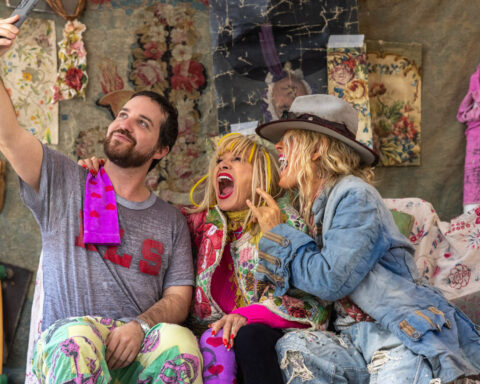

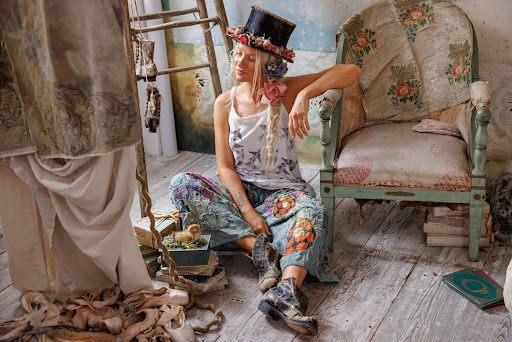
Magnolia Pearl occupies a rare place in fashion, where clothing can move from the public glare of celebrity culture into the quieter, almost devotional world of collectors without losing any of its emotional charge. Its garments do not look polished in the conventional luxury sense. They look weathered, mended, softened by time, and full of memory, as though they carry a past before they ever reach the next wearer. That tension is part of the brand’s power. Magnolia Pearl offers glamour, but it is a glamour marked by wear, tenderness, and survival.
Robin Brown built the company from hardship, instinct, and a fierce belief that beauty can rise from what has been damaged or discarded. That belief still clings to every part of Magnolia Pearl’s aesthetic. A frayed hem does not read as neglect. A patch of faded cloth does not feel accidental. Each detail suggests that repair can be beautiful, and that something touched by struggle may hold more meaning, not less.
The Clothes That Made Wear Desirable
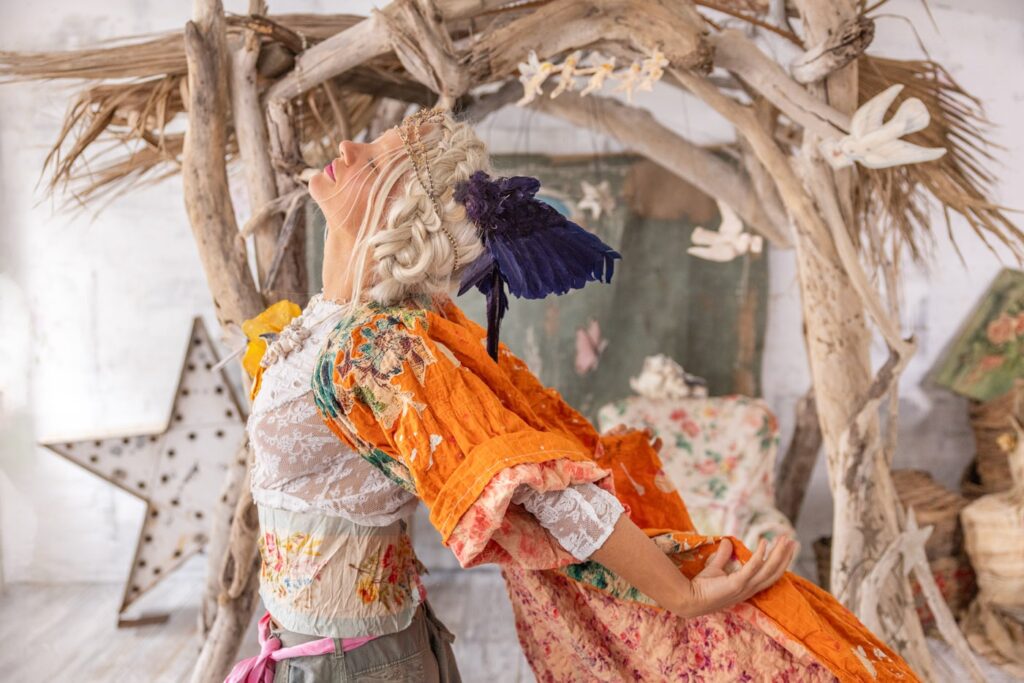
Fashion has long taught consumers to admire the untouched. Magnolia Pearl turned away from that instinct and built its identity around garments that appear lived in, handled, and deeply personal. Lace comes softened, prints look gently worn, and visible mending remains part of the piece instead of being hidden away. Rather than treating age as a flaw, the brand gives it dignity and turns it into part of the garment’s emotional language.
That choice might have kept Magnolia Pearl at the margins, admired by a small circle and little more. Instead, the label found its way into public view through figures like Taylor Swift, who wore it in a music video, and Whoopi Goldberg, who wore it on television. Those appearances mattered because they widened awareness, but celebrity visibility alone does not create lasting demand. The stronger sign of Magnolia Pearl’s influence is that collectors began treating its pieces like keepsakes, and some garments now resell for well over double their original price.
Plenty of labels can place clothing on famous bodies. Very few create a second life strong enough to turn a blouse into a sought-after object and a jacket into something closer to an heirloom than a seasonal purchase. Magnolia Pearl crossed that line because its garments feel less like passing fashion and more like artifacts carrying their own private emotional weather.
Robin Brown and the Beauty of Repair
Every Magnolia Pearl story leads back to Robin Brown, whose life gives the brand its emotional center. Brown has spoken of growing up amid poverty, abuse, hunger, and homelessness while caring for younger siblings. Under those conditions, beauty was never a trivial extra. It was a way of preserving selfhood when much else felt unstable, and that truth remains deeply woven into the company she later built.
The brand’s origin story carries that truth with unusual force. Brown’s first garment was a backpack fashioned from kite string and an old tapestry, and a stranger bought it for the exact amount she needed to retrieve her mother’s ashes from the funeral home. Few stories in fashion feel that raw, and fewer explain a brand so clearly. Magnolia Pearl’s resistance to perfection comes from a life in which repair was never abstract. It was immediate, necessary, and deeply human.
That is why the garments do more than create atmosphere. Their frayed edges, patchwork, and worn textures speak of injury, mercy, and endurance. magnolia
A Resale Market With a Human Purpose
Magnolia Pearl’s most revealing move may be Magnolia Pearl Trade, the brand’s authenticated in-house resale platform. That site gave collectors a formal place to buy pre-loved pieces, pursue rare samples, and keep garments circulating through new hands without stripping them of identity or story. Most brands lose control once the first sale is over. Magnolia Pearl chose to make the second life of the garment part of the brand itself.
That second life supports something larger. The Magnolia Pearl Peace Warrior Foundation, founded in 2020, has raised more than $550,000 for causes that include housing for Indigenous American veterans, food and medical aid for people facing housing insecurity and their pets, arts education, and disaster relief. Magnolia Pearl Trade directs part of exclusive listing value and all third-party seller fees toward that work, giving the resale market a purpose beyond price alone.
A garment can begin in the spotlight, pass into a private closet, reappear in the hands of a collector, and still end up tied to care for someone in need. That is where Magnolia Pearl finds its deepest force. The brand made visible mending desirable, made rarity feel intimate rather than cold, and gave resale the feeling of continuation instead of discard. A wounded thing, tended with patience, can return carrying more worth than before. Magnolia Pearl built its name on that belief, and the loyalty surrounding it suggests that others have believed it too.